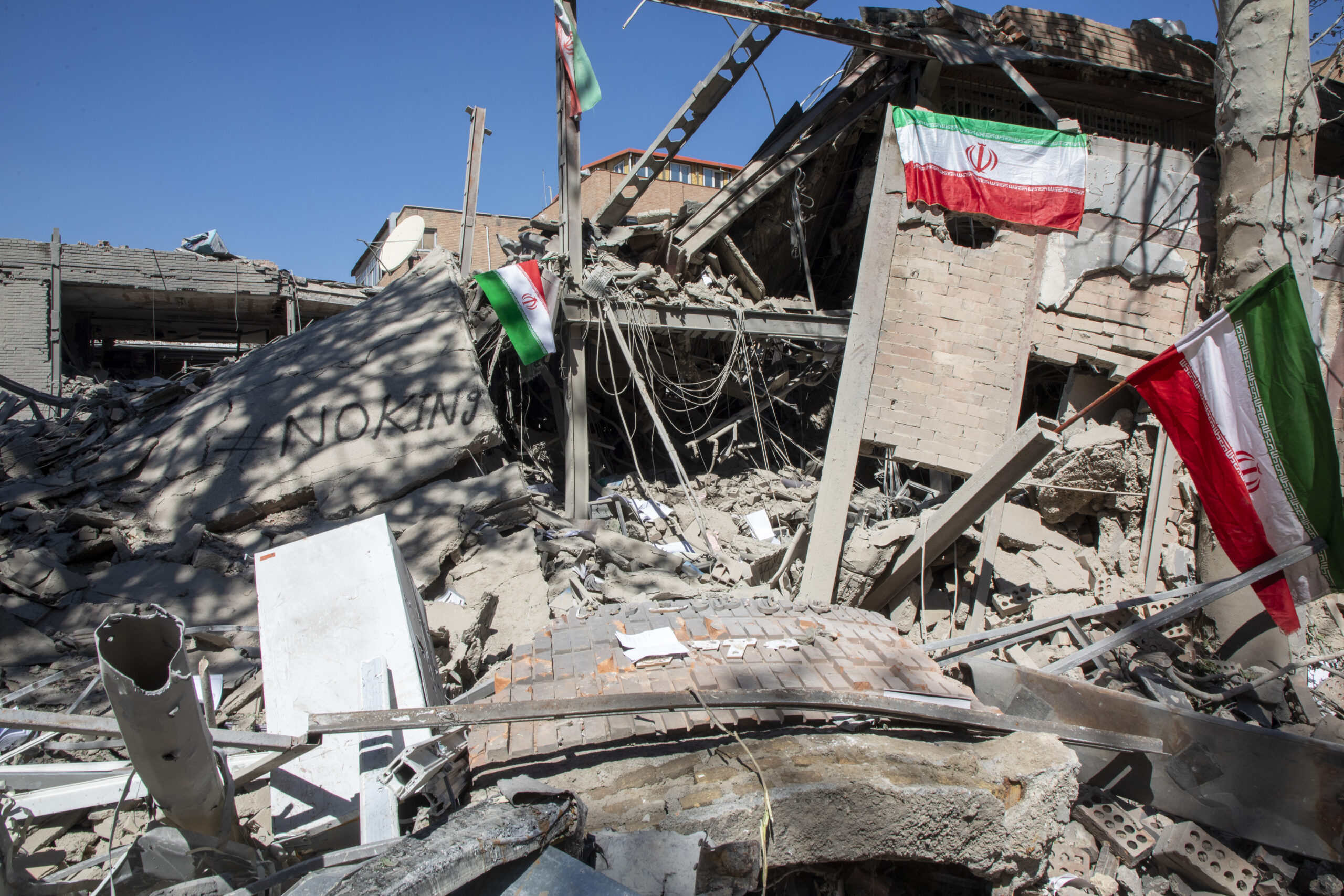





A ceasefire to the Iran War entered its 46th day on Saturday as reports emerged that mediators were closing in on a memorandum of understanding between the U.S. and Iran to extend the ceasefire to the conflict, reopen the Strait of Hormuz, and defer negotiations on Tehran’s nuclear program to a later stage.
The Financial Times reported Saturday, citing anonymous sources briefed on the talks, that mediators are nearing a deal to extend the U.S.–Iran ceasefire by 60 days, with terms that would include the gradual reopening of the Strait of Hormuz, eased restrictions on Iranian ports, phased sanctions relief, and commitments to discuss Iran’s stockpile of highly enriched uranium in the future.
Iran’s foreign ministry spokesman Esmael Baghaei confirmed that a “memorandum of understanding” is being finalized to end the war as the first phase of a broader deal.
CBS News, citing anonymous sources, reported that President Donald Trump was reviewing options on Friday for a new round of military strikes against Iran.
Drop Site News reported Friday, citing a senior Iranian official, that Iran had submitted its latest proposal to end the war to Pakistani mediators, outlining a sequenced framework that seeks to defer nuclear negotiations until after a formal end to hostilities and the reopening of the Strait of Hormuz.
The reporting suggests Iran’s terms to end the war are largely unchanged from previous proposals, with Iran requesting sanctions relief, the release of frozen funds, the exit of U.S. forces from areas close to Iran, an end to the U.S. naval blockade of the Strait of Hormuz, and an end to hostilities on all fronts, including Lebanon, where Israel has waged a deadly military campaign. Under Iran’s plan, the IRGC would temporarily reopen the Strait of Hormuz and waive transit fees after the U.S. lifts its naval blockade of the Strait.
The senior Iranian official told Drop Site that nuclear talks would follow as a separate track with Iran offering to suspend enrichment above 3.6 percent for ten years and dilute existing higher-enriched uranium inside the country under international supervision.
Subscribe Today
Get daily emails in your inbox
The Trump administration has reportedly rejected Iran’s sequencing approach, and U.S. officials continue to press for nuclear issues to be resolved first. “The fundamentals remain the same,” Secretary of State Marco Rubio told reporters in Sweden on Friday. “Iran can never have a nuclear weapon. It just cannot. This regime can never have nuclear weapons, and to achieve that, we’re gonna have to address the issue of enrichment. We’re gonna have to address the issue of the highly enriched uranium. And then added to this, of course, is the issue of the strait.”
Israeli air strikes were reported to have killed 10 people in southern Lebanon on Friday, including one child and six medical first responders. The IDF said a drone made an impact in northern Israel. The details of that incident are currently under review by Israeli authorities.
The price of oil is down from its war-time peaks but still elevated. Brent Crude futures closed Friday at $103.54. AAA reports the national average price of regular gas at $4.53.
Read the full article here