


DAVIS-MONTHAN AIR FORCE BASE, Ariz. —
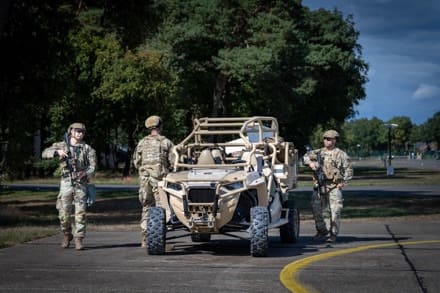
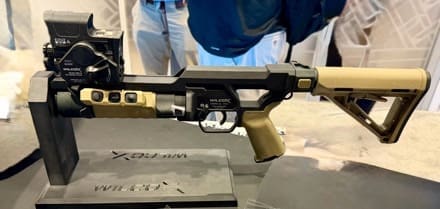
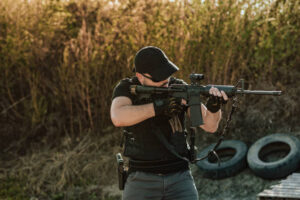
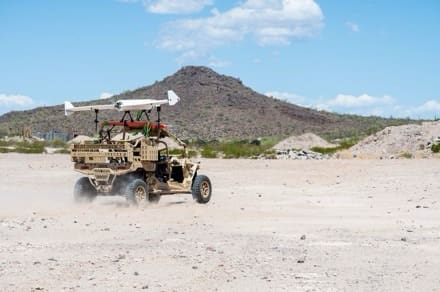
Air Force Special Warfare Airmen from the 48th Rescue Squadron, 7th Air Support Operations Squadron, and 316th Civil Engineer Squadron Explosive Ordnance Disposal conducted a proof-of-concept event on April 7, 2026. The event integrated a commercial off-the-shelf kinetic interceptor with an expeditionary counter-small unmanned aircraft system (C-sUAS) to address critical capability gaps for small teams operating “outside the wire.”
The demonstration took place at the Arizona Army National Guard Florence Military Reservation in Arizona. As adversaries increasingly employ low-cost, one-way attack drones, smaller, forward-deployed teams face growing risks without access to traditional, fixed-site air defense. This event focused on developing a lightweight, deployable capability to detect, track, and defeat Group 1–3 small unmanned aerial systems in austere environments.
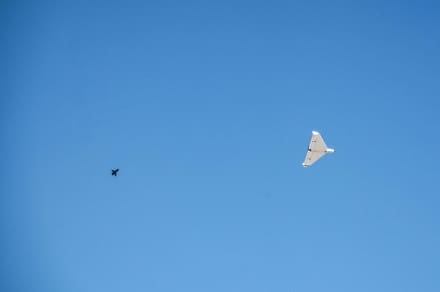
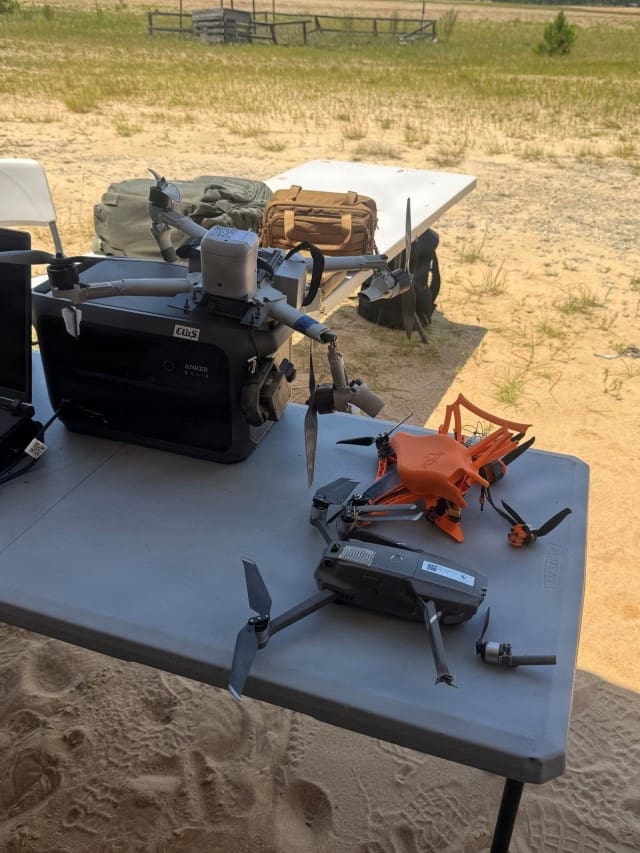
The unit executed a layered approach to C-sUAS operations, integrating low-cost interceptor technology with expeditionary sensing and command-and-control systems. Through this proof-of-concept event, the Arizona Army National Guard, the Southwest Mission Acceleration Center, and multiple industry partners integrated detection tools, command-and-control systems, and various target aircraft.
During the event, AFSW Airmen executed four core functions: detect, assess, command and control, and defeat. The objective was to evaluate the ability to detect an enemy unmanned aircraft and provide tracking data through a common operating picture. The system then cued the interceptor to launch, track, and engage a UAS target, demonstrating a sensor-to-shooter kill chain at an operationally relevant cost.
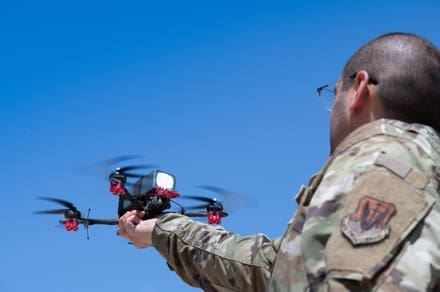
“We are evaluating a range of layered detection and defeat capabilities,” said an AFSW Airman assigned to the 355th Wing. “By employing diverse target profiles, from fixed-wing systems to quadcopters across the Group 1-3 range, we can assess how, when, and where our C-sUAS systems are most effective. Our objective is a man-portable capability with a high degree of autonomy that can operate with minimal infrastructure while remaining fully interoperable within a broader C-sUAS architecture.”
The training highlighted the squadron’s continued evolution beyond its traditional rescue mission, expanding into offensive and defensive small UAS employment in contested environments.
“From a force protection and mission execution standpoint, each layer addresses different threats across varying distances,” the AFSW Airman said. “This approach adapts against near-peer threats while maintaining the cost-effective countermeasures required in modern conflict.”
This effort represents a significant step toward operationalizing expeditionary C-sUAS capabilities by integrating industry-developed and organically produced systems, with a continued focus on rapidly equipping the warfighter in forward environments.
By Senior Airman Jasmyne Bridgers-Matos
355th Wing
Read the full article here