

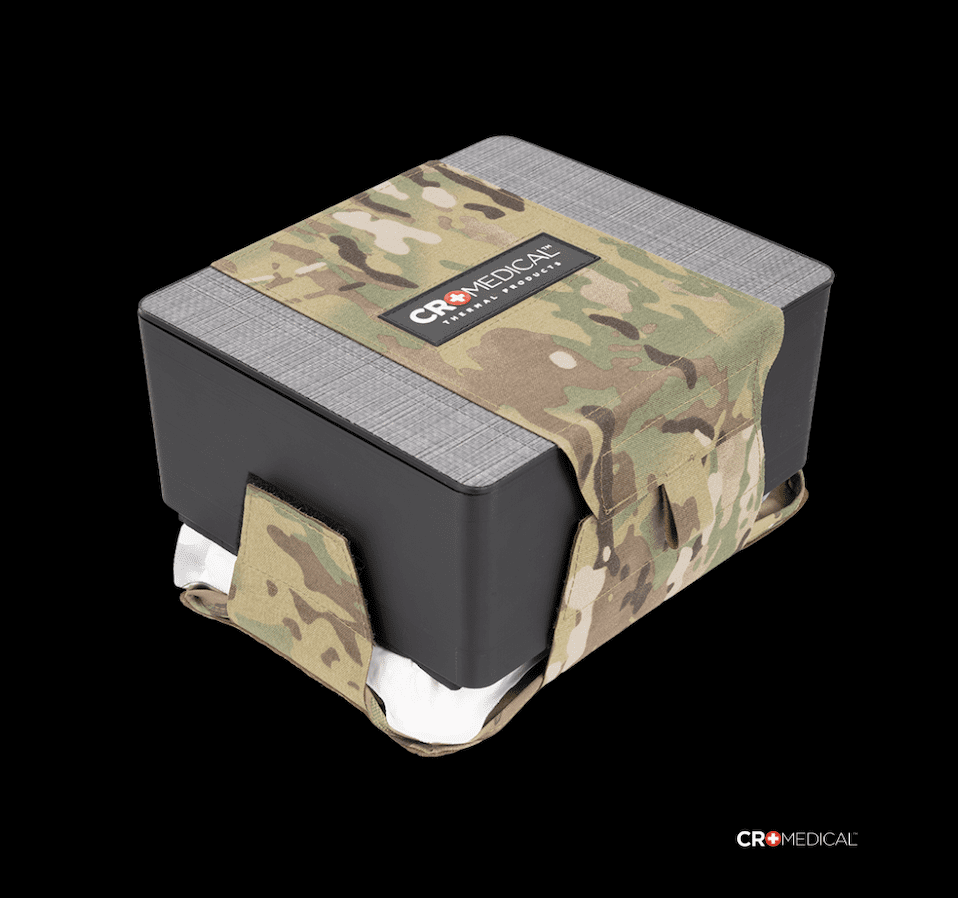
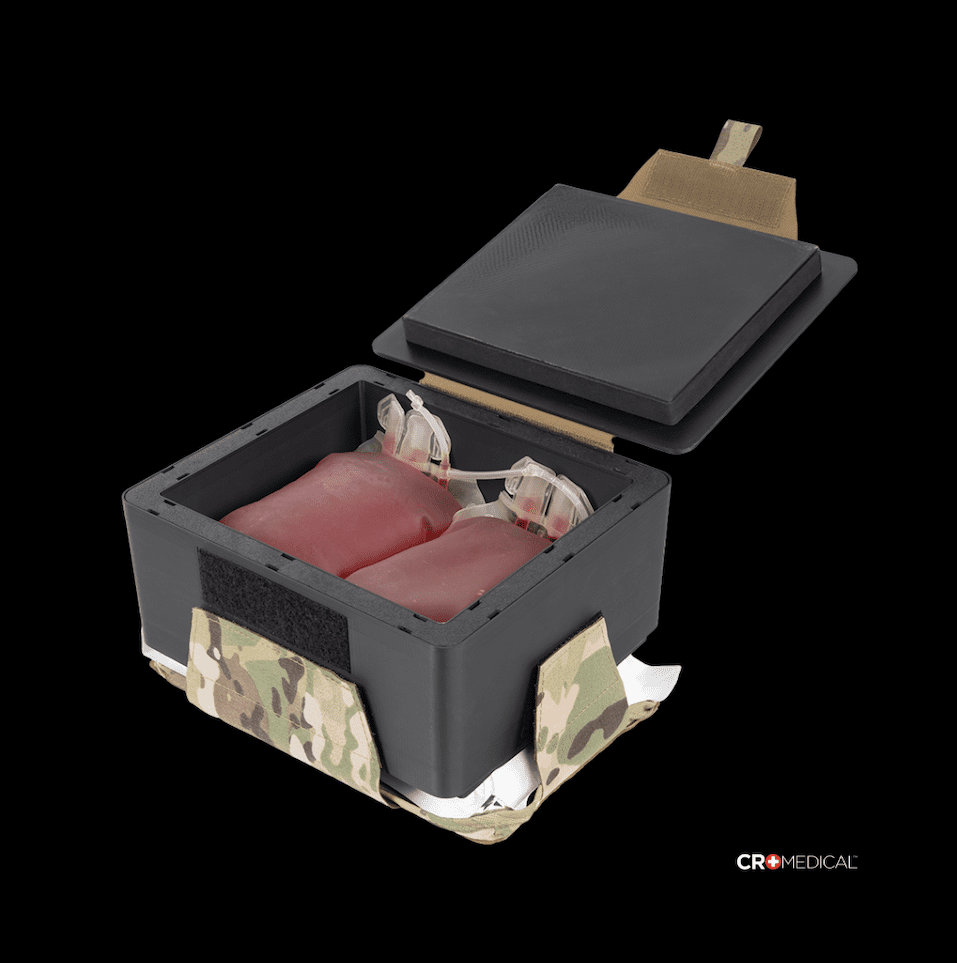
CRO has developed a two-unit (2U) whole blood transport container designed to accept multiple Commercial Off-the-Shelf evaporative cooling engines. The system is intended to sustain up to 42 hours of low-titer O whole blood (LTOWB) cooling within transport temperature parameters (-10°C), depending on configuration and operating conditions.
This solution reduces EM signature, provides indefinite non-powered cooling with appropriate consumable resupply, and addresses delayed MEDEVAC during LSCO.
Background
Contemporary large-scale combat indicates that the increased use of unmanned aircraft systems has expanded persistent ISR (intelligence, surveillance, and reconnaissance) coverage and reduced freedom of maneuver across the battlespace. In LSCO (Large-Scale Combat Operations), units should expect extended disruption to communication, increased sustainment friction, and periods of constrained movement due to persistent aerial observation and strike risk.
These conditions intensify requirements for distributed small-unit operations and longer-duration self-sustainment. Contested airspace and massed fires increase the likelihood of delayed evacuation and degraded medical evacuation times. As evacuation timelines extend, casualty outcomes become increasingly dependent on Prolonged Field Care to include reliable cold-chain sustainment for blood products in austere conditions.
Commanders and medical planners should consider cold-chain solutions that reduce reliance on powered systems and provide resilient, low-complexity backup options consistent with DDIL (Denied, Degraded, Intermittent, and Limited) operating conditions.
Indefinite Cooling with Resupply
Commercially available evaporative cooling systems can provide a non-electric (“analog”) cooling method that reduces reliance on batteries and powered refrigeration in constrained environments. Chemical heat sources can drive phase-change and evaporation processes that transfer cooling to a cold plate without active electrical power, enabling extended cooling duration with appropriate consumable resupply.
Approach
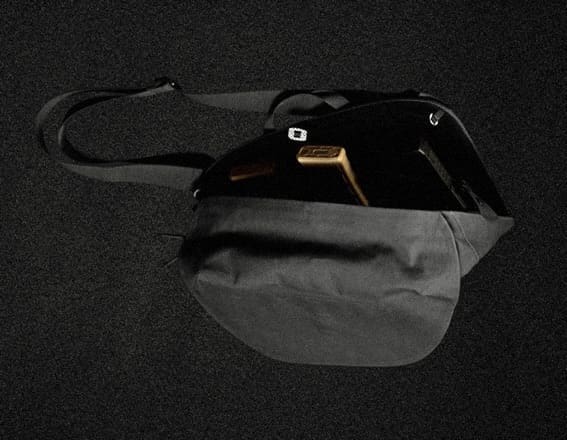
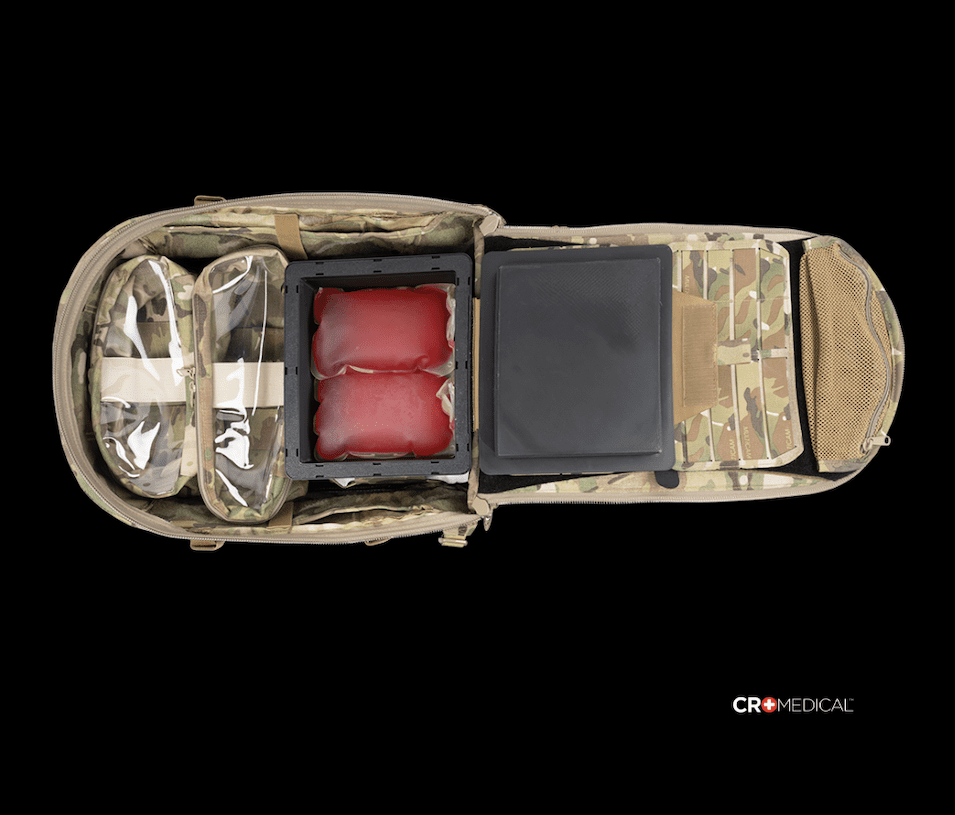
To integrate evaporative cooling into whole blood transport, we addressed two problems in parallel. First, no Commercial Off-the-Shelf (COTS) blood transport container uses evaporative cooling engines, so we had to develop the container architecture from the ground up. Second, the required form factor is not achievable by simply stripping down two single-unit containers and placing them side-by-side, and legacy GWOT-era medical bags were not designed to carry blood at all. Prior solutions largely relied on retrofitting existing equipment. Our approach was to design the 2U container first, then design a bag purpose-built to accept and retain it. This effort resulted in the CRO DCR 26L– a larger, more capable POI medical bag engineered to integrate the 2U Blood Transport Container (BTC).
Production
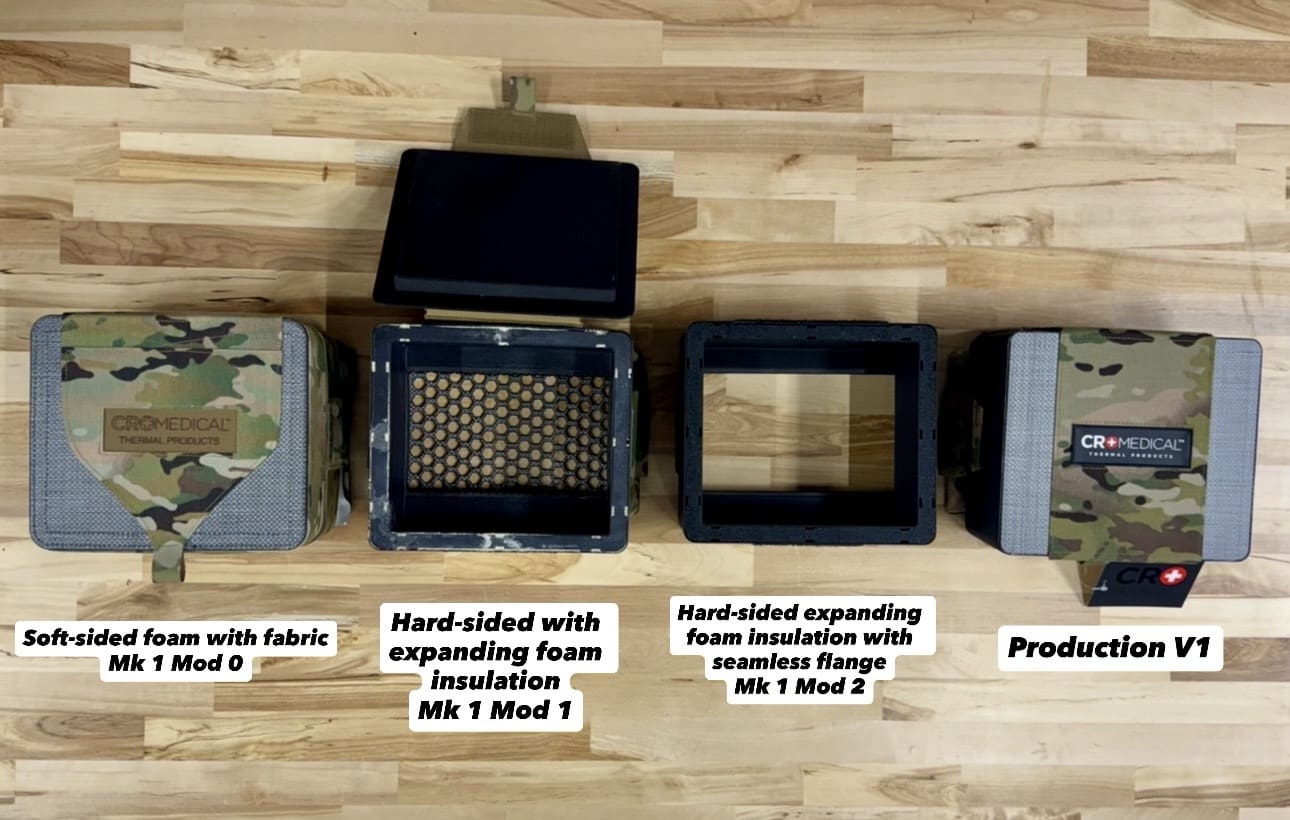
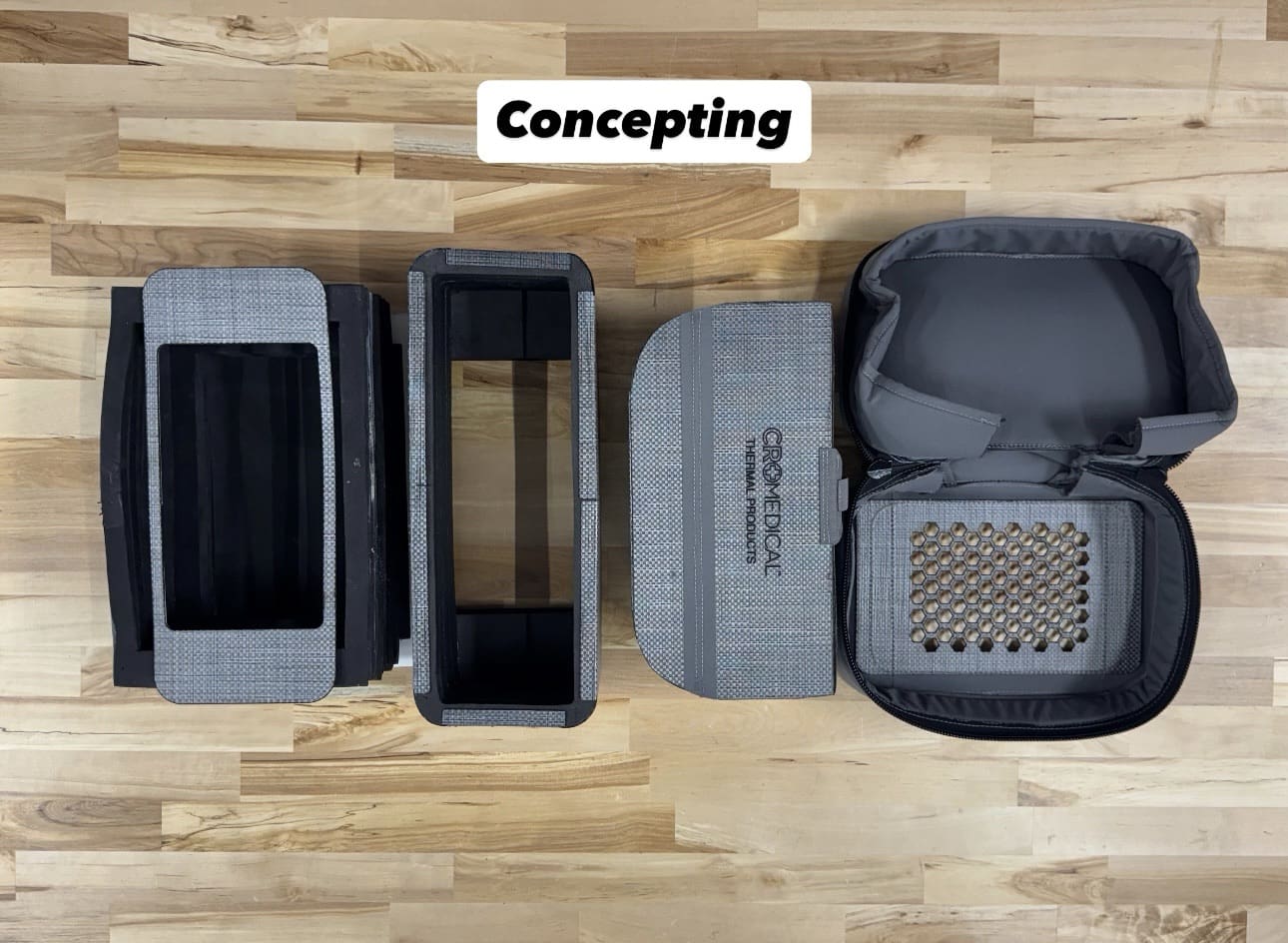
Design for Manufacturing (DFM) began by establishing baseline dimensions using layered foam prototypes. After completing the initial CAD, we evaluated expanding-foam insulation options and refined the flange geometry to prevent foam spillover during assembly. Once the container profile was finalized, we integrated the evaporative cooling engine retention features into the production design.
Production V1 Design
Other Considerations
EM Signature Reduction
In a contested electromagnetic spectrum, electromagnetic signature management is an increasingly relevant survivability consideration. Common medical and support equipment can produce detectable electromagnetic (EM) emissions through electromagnetic interference and unintentional radiators, even when the equipment is not intended to transmit. Distributed small units should account for these emissions and, where practical, mitigate leakage and reduce reliance on powered systems, while recognizing that many battlefield sensor payloads remain primarily electro-optical/infrared (EO/IR).
Targeting Medical Personnel
Medical personnel have faced an elevated risk of engagement in contemporary conflicts, including documented allegations of targeting by the Armed Forces of the Russian Federation. When only medics carry distinctive medical loadouts, visible differentiation can increase exposure to observation and engagement. By selecting and distributing common carriage systems across the element, units can reduce target indicators that single out medical personnel, as multiple personnel will carry similar bags and mixed-use equipment. Preventing medic casualties preserves morale, maintains continuity of care, and sustains overall unit effectiveness.
For additional technical data, configuration options, or pricing, contact customer support: support@cromedical.com
CRO 2U Blood Transport Container (PN: CRO-2U-MC)
DCR 26L first-line aid bag w/ 2U BTC (Bundle PN: DCR-26L-2U-MC).
MSRP: $920.00
Read the full article here