Casualties rarely happen when gear is laid out neatly on a tailgate.
They happen in vehicles, in the dark, in tight spaces, during movement, under stress, and usually when nobody has extra time to sort through equipment. In that moment, the question is not whether a Soldier, law enforcement officer, or first responder has medical gear somewhere on their kit. The question is whether that gear can be found, accessed, and put to work immediately.
That difference matters.
Tourniquets, pressure dressings, chest seals, and other trauma supplies have become standard equipment across military, law enforcement, and emergency response communities. Carrying that equipment is important. But carrying medical gear is not the same as being ready to use it.
A med kit buried behind other equipment, mounted too far back on a belt, trapped under layers of load carriage, or difficult to open with one hand may technically be present. But present is not the same as ready. If the user has to fight the setup before treating the casualty, the gear is already working against the mission.
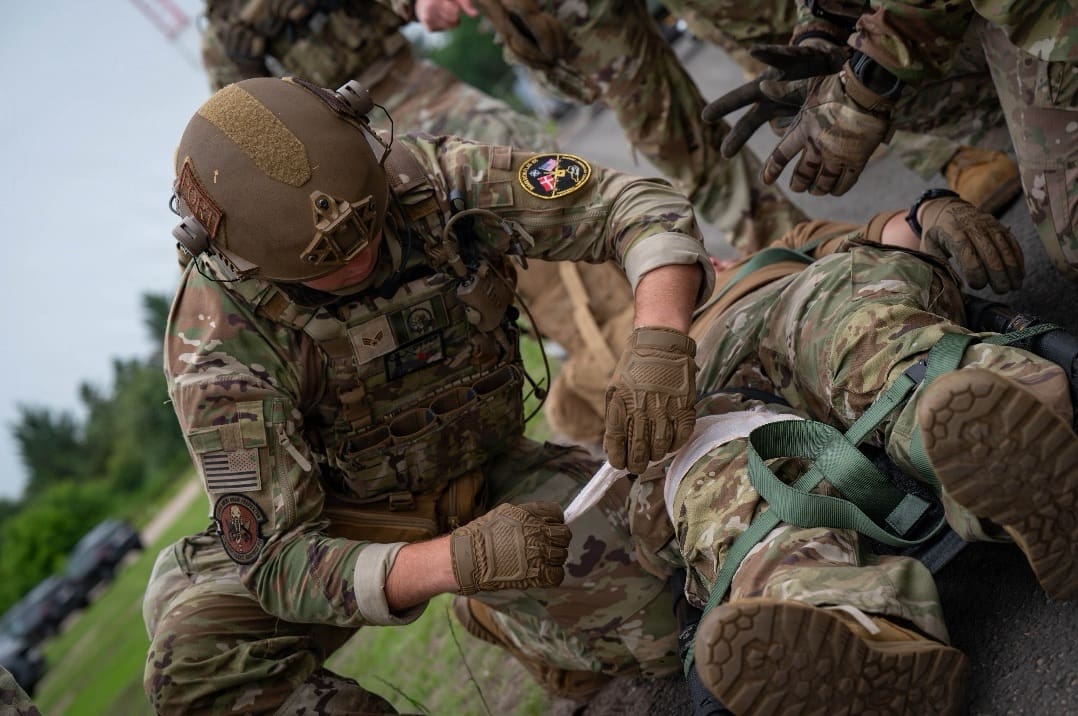
U.S. Air National Guard photo by Master Sgt. Sarah M. McClanahan
Under stress, fine motor skills deteriorate. Decision-making narrows. Tasks that seem simple during equipment layout become harder when the environment is loud, dark, confined, or chaotic. That is why medical gear placement deserves the same level of thought as the contents of the kit itself.
A tactical med kit should be positioned around real use, not just available space.
Can it be reached with either hand?
Can it be accessed while seated in a vehicle?
Can another team member find and deploy it if the casualty cannot?
Can critical items be identified quickly in limited visibility?
Can the kit be opened without dumping the contents or fighting unnecessary closures?
Those questions matter because medical readiness is not measured by how much gear is carried. It is measured by how quickly the right equipment can be employed when seconds matter.
Most warfighters and armed professionals already carry more than enough. Radios, ammunition, comms gear, breaching tools, protective equipment, sustainment items, and mission-specific equipment all compete for limited real estate on the body. As the loadout becomes more complex, medical gear can get pushed into whatever space is left.
That is where problems begin.
An IFAK or trauma kit should not be an afterthought. It should be treated as mission-essential equipment that has to be reachable, identifiable, and secure without becoming a burden. Belt-mounted medical kits, MOLLE-mounted medical pouches, and carrier-mounted trauma kits all have their place, but the location has to match the user, the mission, and the environment.
A patrol officer working from a vehicle may need a different setup than an infantryman moving under load. A member of a tactical team may need the kit accessible to others. A range instructor or prepared citizen may prioritize a smaller belt-mounted trauma kit that can be reached quickly without adding unnecessary bulk.
The right answer depends on the job.
The better way to think about it is not simply, “Do I have a med kit?” It is, “Where should I carry a med kit so it can actually be reached under stress?”
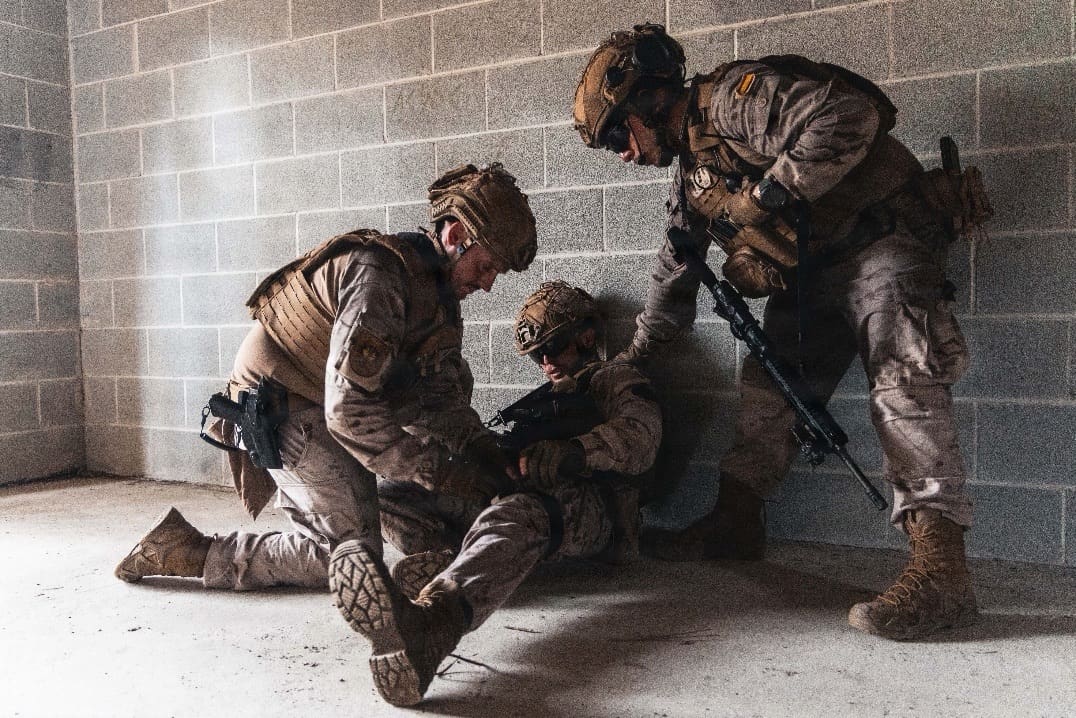
U.S. Marine Corps photo by Sgt. Jorge Borjas
Blue Force Gear® medical kits were built around that reality. The Micro Trauma Kit NOW!® and Trauma Kit NOW!® are designed to keep trauma supplies organized, protected, and accessible without adding unnecessary bulk. The removable insert keeps the contents together, while the BLIP® pull tab allows the kit to be deployed quickly when fine motor skills are compromised. Belt-mounted and MOLLE-mounted options give users the ability to place the kit where it actually makes sense for the mission, not just wherever there is leftover space.
That is especially important when the person who needs the gear may not be the person using it. In a real emergency, another member of the team may be the one reaching for the kit. If they cannot find it, open it, or identify what is inside quickly, valuable time is lost.
Emergencies do not reward preparation on paper.
They reward action.
And action starts with being able to reach the equipment that matters most.
Medical readiness is more than checking a box on an equipment list. It requires thoughtful placement, reliable access, and consistent training. Teams that evaluate trauma equipment through access, not just inventory, are better positioned to respond when seconds matter.
If the kit cannot be reached with either hand, found by another member of the team, or opened when conditions are less than ideal, the setup needs to be reconsidered.
The best medical gear in the world cannot help if it cannot be reached.
That is the reality Blue Force Gear designs for. The Micro Trauma Kit NOW! and Trauma Kit NOW! are built to cut through those critical seconds of hesitation, keeping life-saving supplies exactly where you need them, organized, visible, and ready when hands begin to shake and fine motor skills start to fade. When stress closes in and time slips away, there is no room to search or fumble. In the moment that matters most, access is not just important. It is everything.
For units seeking to increase survivability and operational performance through reduced load carriage by upgrading to Helium Whisper, contact the Blue Force Gear Military Department or visit BlueForceGear.com.
Read the full article here