

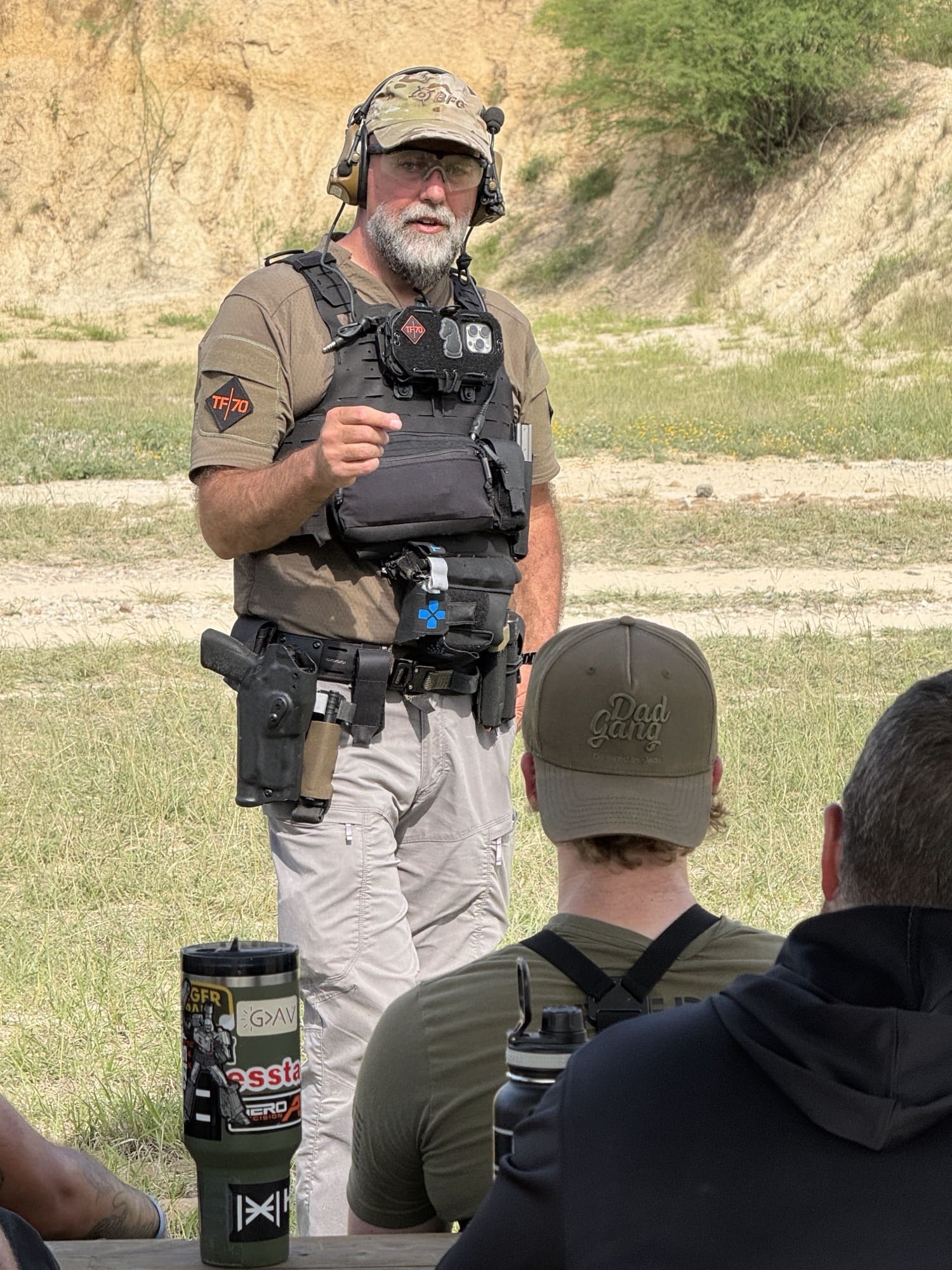
By John Chapman
Executive Director, Task Force 70 Foundation
Good equipment matters, but a collection of good equipment does not automatically create a good loadout. If the pieces were selected individually and never tested together, the setup can still fight the officer every time something needs to be reached, moved, or controlled. Load carriage has to work as a system.
A working loadout is not only lighter. It carries the weight deliberately, keeps critical equipment in a predictable location, controls anything that can move or snag, and accounts for ammunition and medical before the remaining space gets filled.
Most loadouts are not built that way. They grow one purchase at a time. A pouch is added because it solves one problem. A medical kit gets attached wherever space remains. A new sling goes on the rifle without anyone checking where the adjustment hardware or excess webbing sits against the rest of the equipment.
Eventually, everything technically fits, but nothing really works together.
The magazine pouch crowds the medical kit. The sling catches on a light, radio, or pouch. Equipment shifts when the officer runs or goes hands-on. Something that was easy to reach while standing becomes difficult to access from inside a patrol vehicle.
At that point, the officer is managing the equipment instead of using it.
Start With Four Requirements
A working loadout should address four things: carry, access, control, and sustainment.
Carry
Weight has to be distributed deliberately between the belt and carrier, kept close to the body, and evaluated over more than a few minutes on the range.
A setup that feels acceptable while standing at an equipment table may become a problem after hours of driving, walking, getting in and out of a vehicle, or moving through structures. Where the equipment sits matters as much as what the equipment weighs.
The goal is not to move every item off the belt or onto a carrier. It is to avoid concentrating weight unnecessarily in one area and creating pressure points that become harder to tolerate over a full shift.
Access
Critical equipment should be found through a repeatable movement, not a search.
If a magazine sits in a different location on every setup an officer trains or works in, the officer has to mentally correct for the difference. When equipment remains in a consistent location, the reach becomes more predictable.
Under pressure, an officer should not have to remember where something was placed on this particular belt or carrier. Consistent placement reduces unnecessary decisions and helps make equipment access more repeatable.
That does not mean every officer must have an identical loadout. Body type, assignment, agency policy, vehicle configuration, and mission requirements all matter. It means the location of essential equipment should be chosen intentionally and kept as consistent as those requirements allow.
Control
Anything that swings, shifts, or hangs loose becomes something else the officer has to manage.
That matters while running. It matters while climbing out of a vehicle. It especially matters during a hands-on encounter, when loose straps, exposed equipment, and poorly controlled pouches can snag, interfere with movement, or contribute to equipment loss.
A clean setup is not about appearance. It is about keeping equipment close to the body and limiting unnecessary movement.
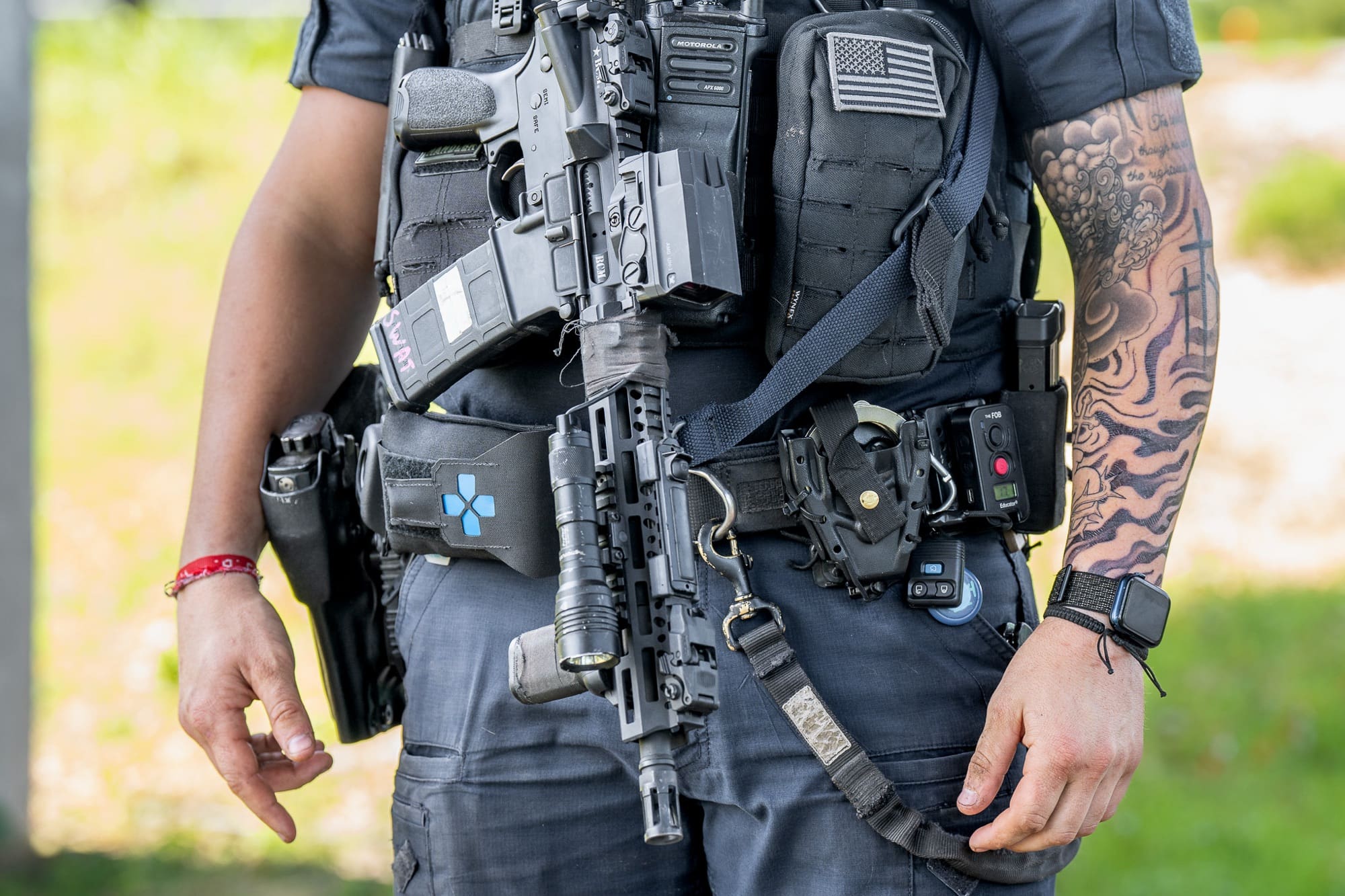
This is where individual pieces have to be evaluated against their surroundings. A two-point sling such as the Vickers Sling™ can secure the rifle tightly against the body and adjust rapidly when it is time to present the weapon. That benefit is reduced if the sling’s routing or remaining webbing interferes with a radio, light, medical kit, or belt-mounted equipment.
The sling may work correctly by itself. The question is whether it still works correctly as part of the complete loadout.
Sustainment
Medical equipment and reloads should be accounted for before the remaining space is filled.
Those requirements take up space whether they are planned early or forced into the setup later. When they are added last, access is often compromised by whatever was already placed on the belt or carrier.
Medical equipment in particular cannot be treated as an accessory. The kit should remain secure during movement, accessible from a practical position, and recognizable to another officer who may need to deploy it.
A compact medical kit such as the Trauma Kit NOW!® can help preserve limited space on an officer’s duty rig, but the size of the kit does not solve a poor mounting decision. The officer still has to test whether it can be reached from the intended position, accessed around body armor, and deployed while seated or working from an unfamiliar angle.
The right medical kit in the wrong place is still the wrong setup.
Build Around the Fixed Points

A practical way to configure a law-enforcement loadout is to begin with the items whose locations are primarily dictated by the job.
The holster, radio, less-lethal equipment, and agency-required items establish many of the fixed points. Medical and reloads should then receive deliberate space based on access rather than whatever room remains.
Once those fixed points are established, test how the complete system interacts:
• Can the officer enter and exit the vehicle without equipment catching on the seat, steering wheel, or door frame?
• Can magazines be accessed through the same basic movement used during training?
• Can the medical kit be reached without fighting another pouch?
• Can the rifle be secured close to the body without the sling interfering with belt- or carrier-mounted equipment?
• Does anything shift, flap, or come loose when the officer runs, climbs, kneels, or goes hands-on?
• Can another officer identify and access the medical equipment if the wearer cannot?
Those questions reveal more than standing in front of a mirror and deciding whether everything fits.
Weight Is Cumulative
There is rarely one piece of equipment responsible for all the unnecessary weight in a loadout. Weight accumulates through mounting hardware, extra webbing, overlapping materials, oversized pouches, and items carried because there happened to be space available.
That is why material and construction decisions matter across the entire system.
A lightweight platform such as the GRID® Belt helps reduce weight at the foundation of the setup. Helium Whisper® attachment systems can reduce pouch weight by up to 50 percent compared with legacy pouch designs while maintaining MOLLE and PALS compatibility. Across several pouches, those individual savings begin to add up.
Still, the lightest equipment available will not correct a poor layout.
A lightweight pouch mounted where it cannot be reached is not an improvement. A lightweight belt carrying too many unnecessary items remains overloaded. Weight reduction and thoughtful placement have to support each ot
Let the Instructors Find the Problems
Before committing an agency or team to a particular setup, put the complete system in front of the people who will train with it.
Firearms instructors may identify conflicts with the draw, reloads, or sling management. Medical instructors may see an access problem that was not apparent during the initial setup. Defensive-tactics instructors may find loose equipment or exposed straps that become a problem during physical contact.
Then test the loadout in the places where officers will actually use it.
Sit in the vehicle. Get out from both sides. Move through a doorway. Go to the ground. Access the radio. Transition the rifle. Reach the medical kit with either hand where practical. Have another officer locate it.
A catalog can explain what each product was designed to do. It cannot tell an agency whether every piece will work together on a specific officer, in a specific vehicle, under that agency’s policies and training.
That requires evaluation.
A working loadout should reduce the number of things an officer has to manage, not add to them. Build it deliberately, test it during movement, test it from the vehicle, and let the people who train with it find the conflicts.
That is the difference between owning equipment and running a system.
Build Your Loadout as a System
Explore Blue Force Gear® belts, slings, medical kits, and lightweight pouch solutions designed to work together.
Explore Load-Carriage Systems.
About the Author
John Chapman, known widely as “Chappy,” is a law-enforcement professional with more than 34 years of experience in operations, leadership, doctrinal development, applications engineering, and training.
A published author, he has spent more than 28 years developing and delivering patrol and tactical law-enforcement curricula. Through the Task Force 70 Foundation, John helps provide training, mentoring, and education to underserved rural and small-town law-enforcement officers and agencies across the United States.
Learn more about the Task Force 70 Foundation.
About Blue Force Gear
Blue Force Gear® is a leading innovator in lightweight tactical equipment, best known for producing some of the world’s most trusted weapon slings. The company continues to redefine load carriage with its Ten-Speed® multi-use pouches, MOLLEminus® platforms, and patented Helium Whisper® attachment system.
Driven by a commitment to performance and weight reduction, Blue Force Gear® engineers its products using proprietary ULTRACOMP® high-performance laminate materials, delivering durability without unnecessary bulk. This relentless focus on innovation, combined with precision manufacturing and attention to detail, has positioned the brand at the forefront of modern tactical gear.
Blue Force Gear® is a Great Place to Work® Certified company, reflecting its dedication not only to the warfighter, but to the people behind the mission.
For more information, visit www.blueforcegear.com.
Read the full article here