
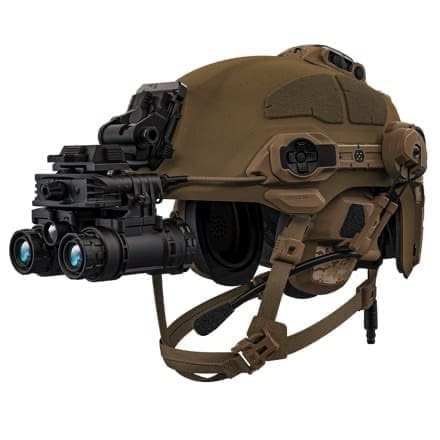
Fourteen years ago, Galvion was awarded its first helmet contract with NATO. Since then they have worked to improve the fit and function of their helmets as well as integrate communications and computing capabilities. The result is the second release in the Cortex ecosystem, EVO.
A year ago we showed you Galvion’s Cortex system, promising that eventually, it would move beyond an appliqué to become fully integrated into the helmet. With EVO, Galvion has delivered on that promise.
Right up front it’s important to acknowledge that Galvion made it very clear to us, Cortex EVO isn’t a helmet, it’s a platform.
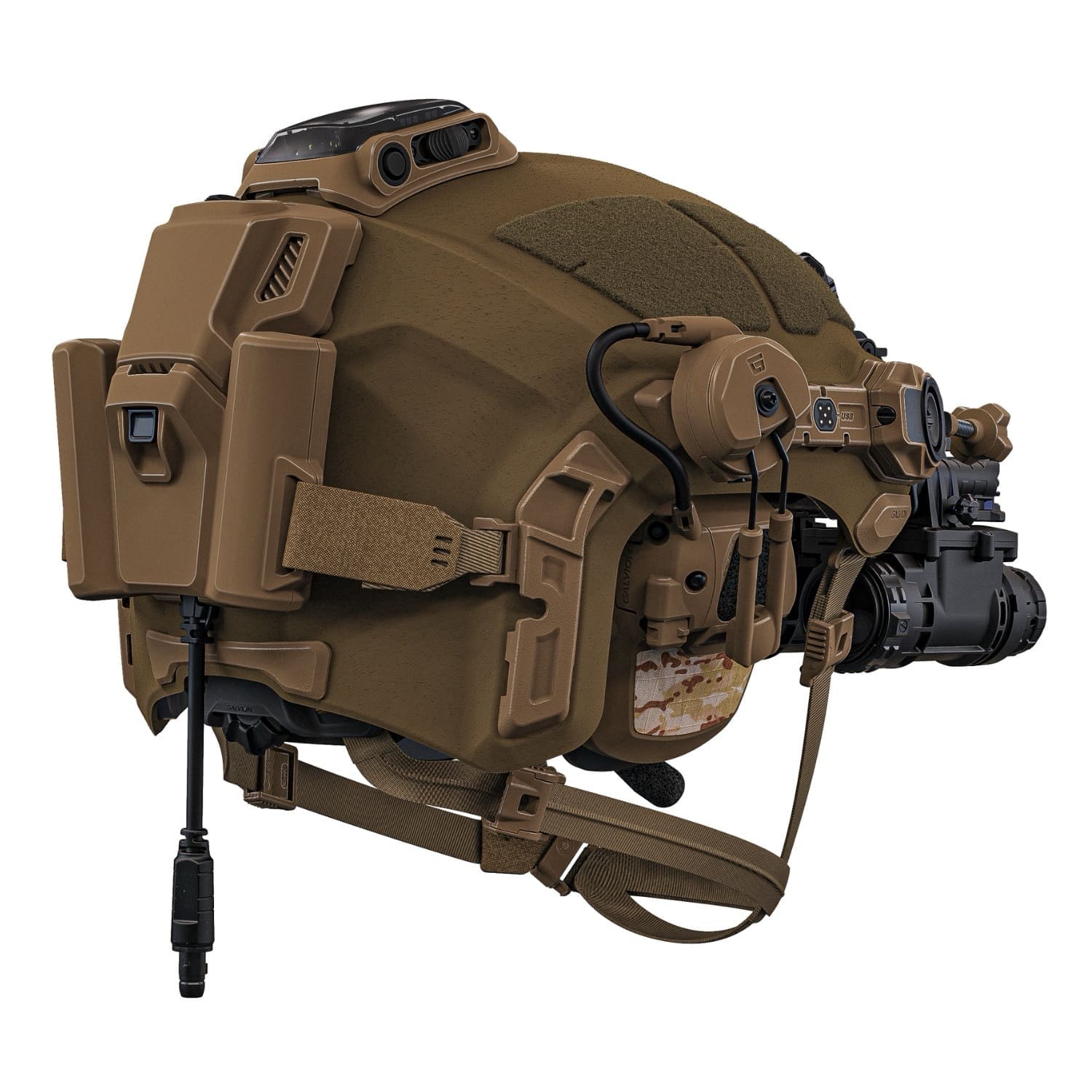
EVO offers full integration of enablers and is lightweight with a small form factor. Ultimately it could be described as “slick.” You don’t encounter a helmet covered in cables. Starting with a ballistic core and building outward, Cortex EVO integrates embedded power/data pathways and features an outer lightweight composite shell.
During the development of Cortex EVO, Galvion started with what most of us would consider the inside out. Essentially, Galvion embedded the capabilities developed for Cortex within the helmet. They refined their electro-optical / communications platform and then sandwiched it between the ballistic inner and outer composite shell. This approach was based on operator feedback who were satisfied with each of the individual capabilities provided by modern headborne systems but were dissatisfied with the integration of them into a single platform.
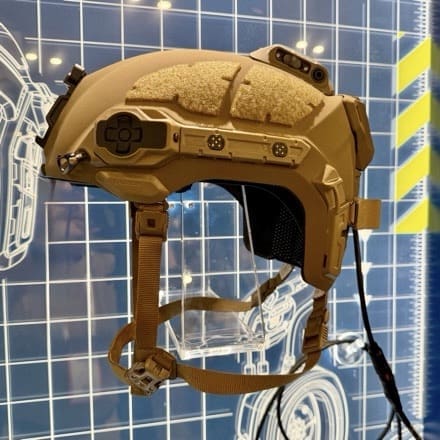
Technically, they have taken Cortex to the next level. Not only is EVO the nexus of information for the operator but it also serves as a node in a larger network, connecting the eyes and ears to the system but also offerering onboard processing. Likewise it can share computational demands with the operator’s End User Device with the connection accomplished through a single cable lead.
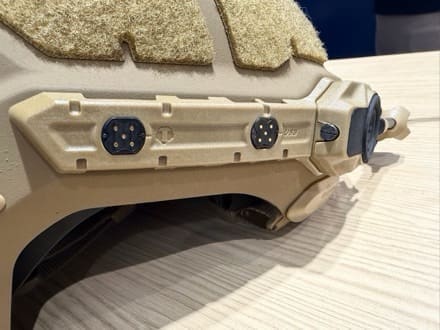
As part of a “get your head out of your TAK” effort, Galvion has also rolled out AlertCentr, which interfaces with Tactical Awareness Kit and features configurable visual and audio cues so operators can react to alerts.
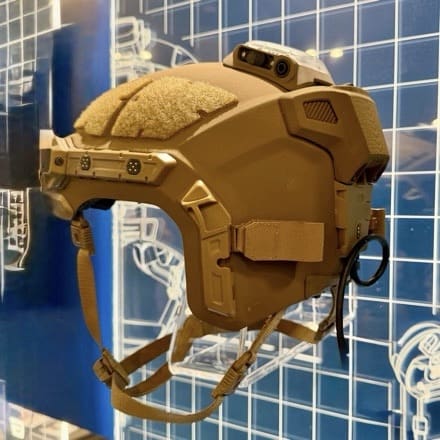
One interesting feature that the full headborne hemlet integration of EVO has afforded is that the computational module incorporates thermal signature management. The platform is also programmable and upgradable as additional capabilities are developed with plug and play capabilities for new enablers as they roll out.
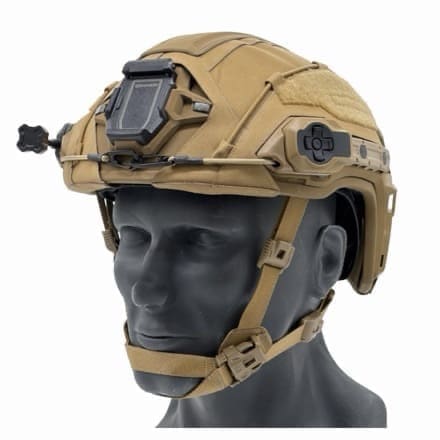
The Galvion team also showed me how the same technology can be applied to a standard helmet, like their Caiman. This EVO HALO configuration has all the same technology and capabilities delivered in a system that can be added to an existing helmet with minimal retrofitting. This slick and lightweight. And while a little heavier than the fully embedded system, it offers a great upgrade path for existing Users
Another important feature for EVO is that it is fully manufacturable at this point and can be maintained at the unit with minimal training. This is not a science project and is ready for unconstrained trials. In fact, Galvion representatives told me that they want to see the platform out there in full operational use.
www.galvion.com
Read the full article here