



Scotland played a pivotal role as a training ground for some of the most Elite Allied forces, including the U.S. Army Rangers, the Office of Strategic Services (OSS), and the Jedburgh teams.
The rugged landscapes of the Scottish Highlands, combined with the expertise of the Special Operations Executive (SOE) & Commandos provided an unparalleled environment for training in guerrilla warfare, sabotage, and special operations. The collaboration between British Commandos, SOE operatives, and their American counterparts helped forge the foundations of modern day Special Forces.
Rangers
The formation of the 1st Ranger Battalion marked a significant milestone in the development of Elite U.S. Military forces during WW2. The battalion’s initial members were primarily drawn from two divisions recently sent to Ireland from the United States: the 34th Infantry Division and the 1st Armoured Division. In May 1942, Company A of the 1st Ranger Battalion was established, comprising all volunteer soldiers under the leadership of Captain William Darby.
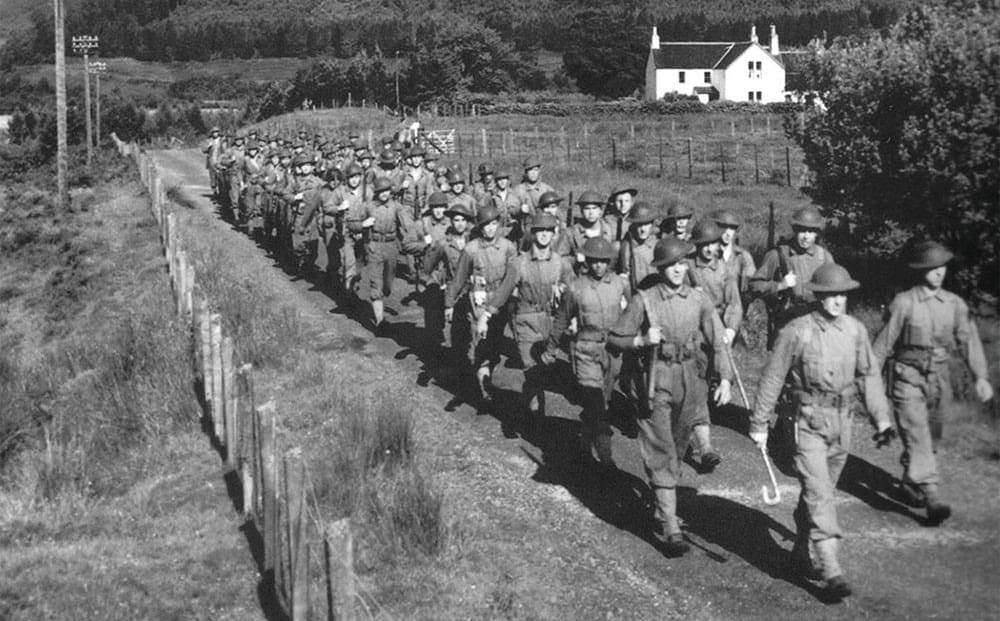
B Company, 1st Ranger Battalion on a training road march near Achnacarry, Scotland, July 1942.
After its formation, Company A relocated to Scotland, where the men were trained by British Commandos at the rigorous Commando Basic Training Centre (CBTC) near Achnacarry Castle. Training was supplemented by the SOE, whose Elite Raiders had extensive experience in covert operations and behind-enemy-lines missions.
This collaboration exposed the Rangers to advanced techniques in sabotage, reconnaissance, and amphibious assaults. Some Rangers participated in their first combat action during the Dieppe Raid in August 1942, becoming some of the first U.S. troops to fight in Europe during the war.
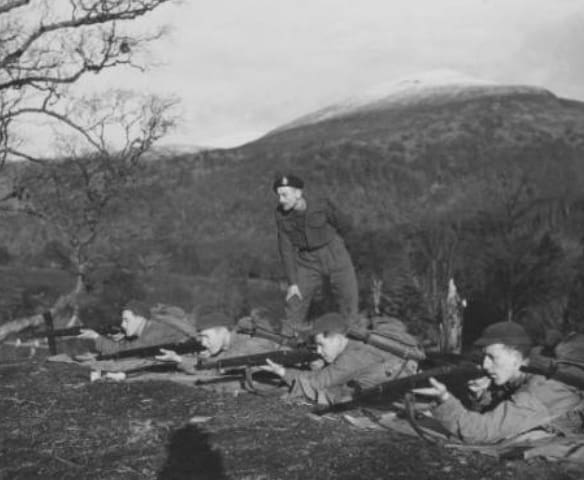
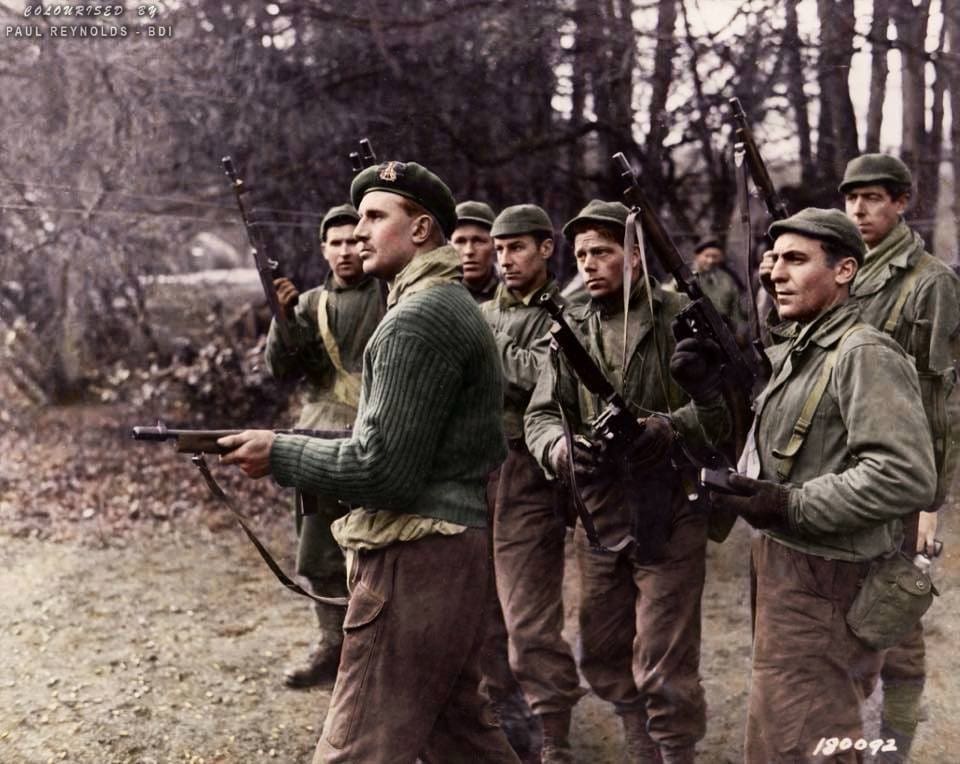
Lt. Derek Burr Commando Depot stands behind four men of a Ranger unit instructing in the use of a M.1. Rifle. Feb 1943.
Over time, the 1st Ranger Battalion expanded into a force of 467 men. It played a key role in the North African campaign, including Operation Torch, serving alongside Nos. 1 and 6 British Army Commandos. This success led to the formation of additional Ranger battalions, which went on to participate in operations across all major theatres of the war.
Following the successes of the 1st Ranger Battalion in North Africa, Captain William Darby was tasked with forming two additional battalions: the 3rd and 4th Ranger Battalions, activated and trained at Nemours, Algeria, in April 1943. The 1st Battalion was restructured with its original A and B Companies, while the 3rd and 4th Battalions were formed around C/D and E/F Companies, respectively. Darby, supported by experienced officers and non-commissioned officers, incorporated hundreds of combat-tested soldiers from Seventh Army units into the new battalions.
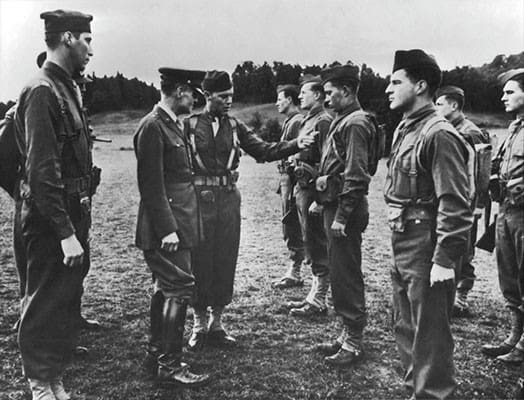
Brigadier General Lucian Truscott Jr. (Centre with riding boots) and Major William O. Darby (pointing) inspect C Company, 1st Ranger Battalion on 2 September 1942 at Dundee, Scotland.
The 3 Battalions underwent an intensive three-week training regimen to prepare for Operation HUSKY, the Allied invasion of Sicily. In summary, the 1st Ranger Battalion was the pioneering unit and the precursor to later Ranger units that followed in the post-war era, such as the establishment of the modern day 75th Ranger Regiment.
OSS Training in Scotland
The training of Office of Strategic Services (OSS) operatives in Scotland had its foundation in the expertise and methodologies developed by the British Special Operations Executive (SOE). The OSS, created in 1942 as America’s first centralised intelligence and Special Operations Agency, partnered with the SOE to leverage their experience in unconventional warfare. Early OSS operatives often trained alongside SOE personnel, adopting and refining techniques that had already proven effective in sabotage, espionage, and guerrilla warfare.
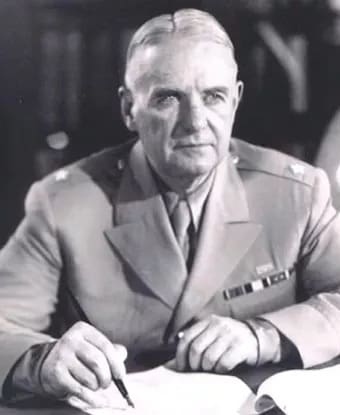
The Office of Strategic Services (OSS) was created under the leadership of Major General William J. “Wild Bill” Donovan. Known as the “father of American intelligence.
Before the Office of Strategic Services (OSS) was officially formed in June 1941, some American personnel, including future OSS operatives, received informal training alongside the British Special Operations Executive (SOE) in Scotland starting in 1940.
These early training efforts focused on sabotage, guerrilla warfare, and espionage. After the OSS was established, it began sending operatives to Scotland for more structured training in 1942, building on the collaboration with the SOE.
Additionally, Camp X in Ontario, Canada, was set up in December 1941 to provide formal espionage and sabotage training, with operatives often training there before being sent to Scotland for further specialised instruction.
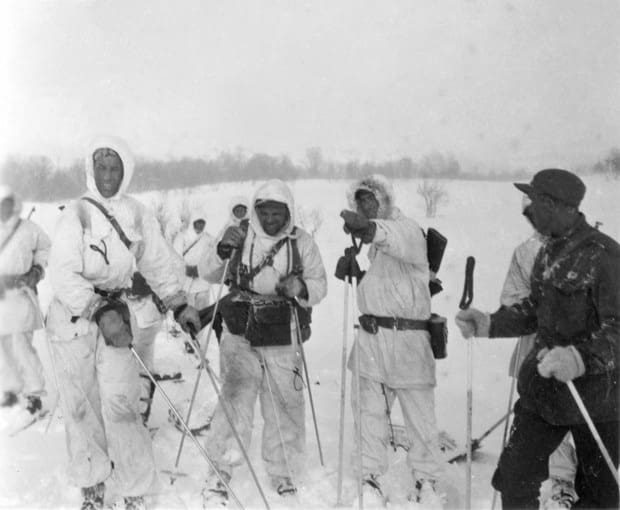
OSS on Operation Rype Norway May 1945.
The OSS adopted many of the SOE’s training techniques and operational strategies, particularly in the use of small, autonomous teams for high-risk missions. The collaboration was instrumental in preparing operatives to work effectively behind enemy lines.
In occupied Europe, OSS agents often partnered with SOE operatives and local resistance movements, engaging in activities such as: Sabotaging railways, bridges, and supply depots to hinder enemy logistics. Organising and arming guerrilla forces to launch coordinated attacks. Gathering and transmitting vital intelligence on enemy positions and movements.
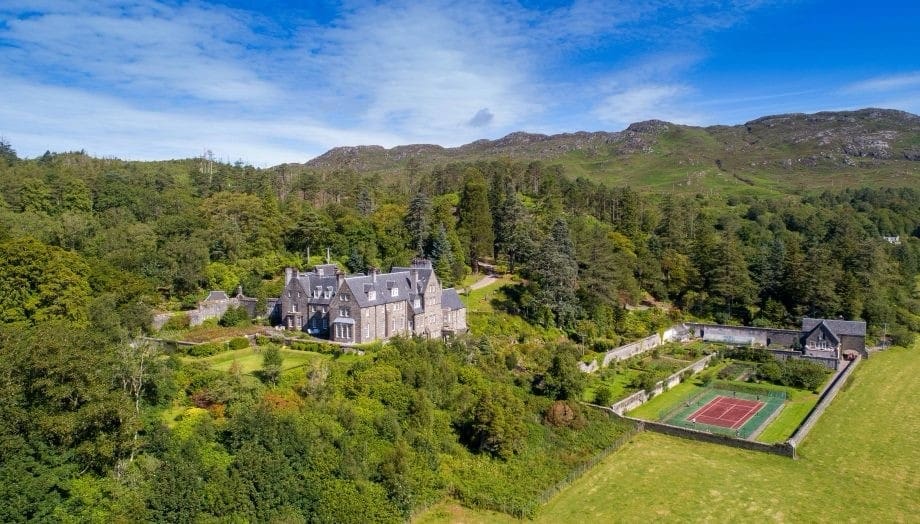
Arisaig House Special Training School, designated STS21.
The Scottish Highlands provided an ideal setting for this training, as the rugged terrain and unpredictable weather mirrored the challenges operatives would face in the field. The shared training experiences between the OSS and SOE not only forged strong Allied partnerships but also laid the foundation for the OSS’s evolution into a highly effective covert operations force.
The OSS and SOE worked together for about 2 years, from 1940 when informal training began, through the OSS’s formation in 1941, and continuing through 1942–1943 as part of more formalised training.
The early collaboration with the SOE proved to be a defining element of the OSS’s success. The techniques, tactics, and ethos learned during their Scottish training shaped the OSS into a formidable wartime organisation and provided the foundation for the creation of modern American Special Operations Forces and intelligence agencies. This partnership underscored the enduring importance of joint training and innovation in special warfare.
Jedburgh Teams
Project Jedburgh was a ground-breaking Allied initiative involving the OSS Special Operations (SO) branch, the British Special Operations Executive (SOE), and the French Bureau Central de Renseignements et d’Action (BCRA). Its goal was to support and coordinate with resistance movements in occupied territories.
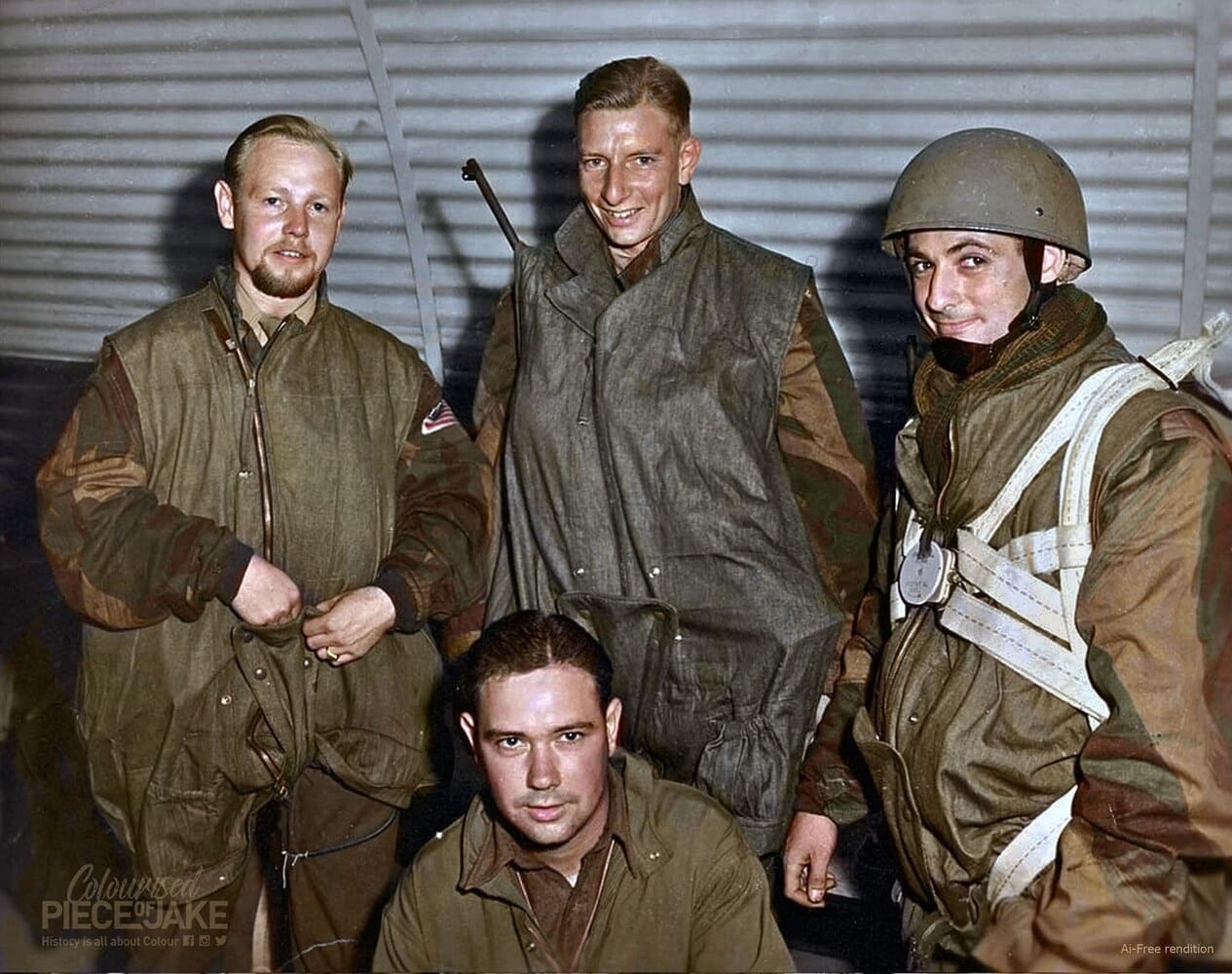
Aug 6th 1944, England, 4 Jedburgh’s from team ‘IVOR’ shortly before heading to France.
A total of 83 American, 90 British, 103 French, 5 Belgian, and 5 Dutch operatives were meticulously trained in paramilitary techniques for Jedburgh missions. Selected men were sent for two weeks of commando training in Scotland, followed by further specific training at Milton Hall, near Peterborough. Teams were designed to:
Supplement and support existing SO/SOE resistance networks (known as “circuits”). Organise, arm, and train local resistance forces. Arrange supply drops and procure intelligence. Conduct sabotage operations and liaise between resistance groups and Allied forces.
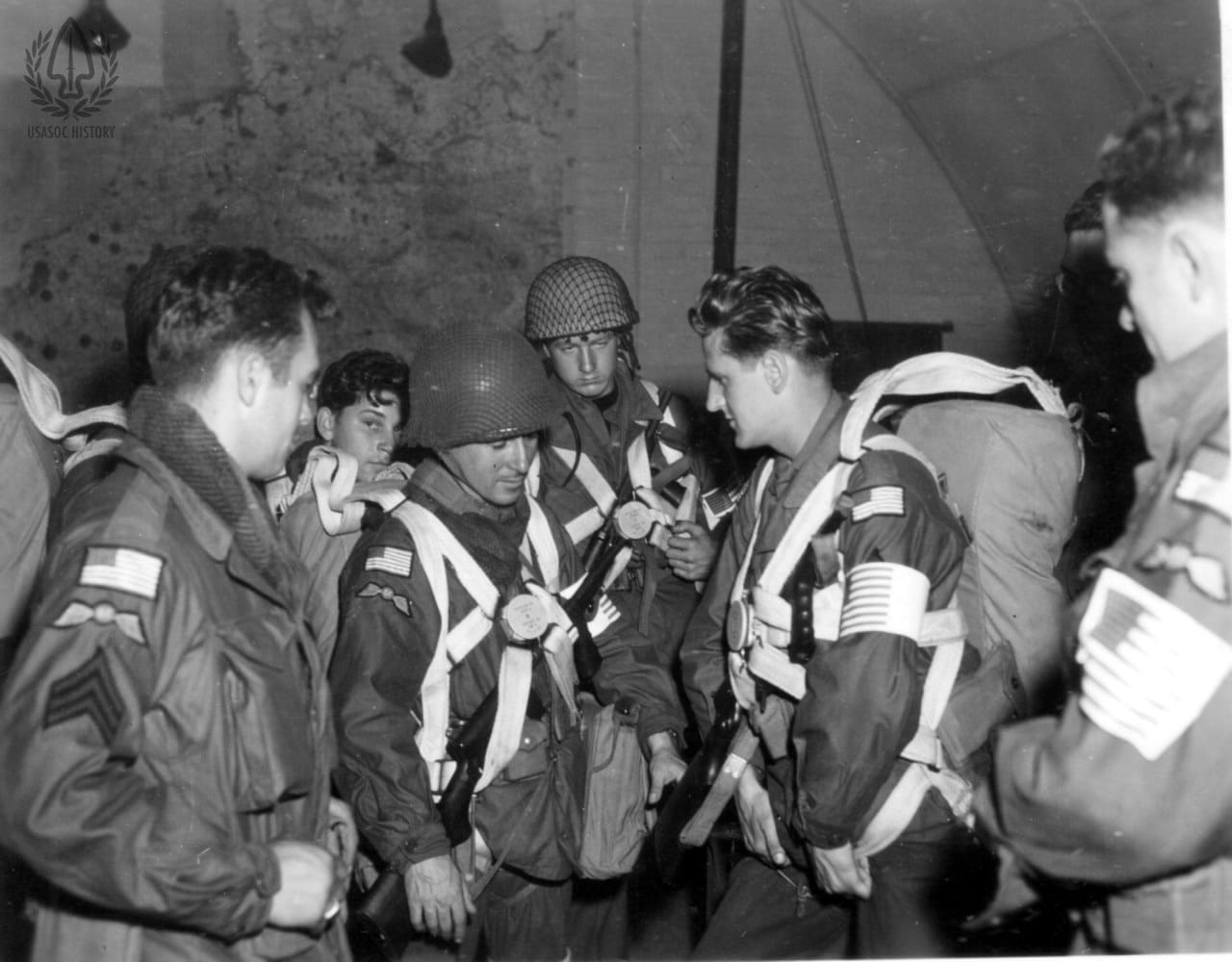
Members of OSS Operational Group ADRIAN prepare to jump into occupied France in September 1944.
Ninety-three Jedburgh teams parachuted into France, and eight were deployed to The Netherlands. A typical team consisted of three members: one French, one British, and one American operative. Each team had at least one officer and a radio operator, though team sizes varied from two to four personnel.
These teams played a critical role in disrupting German operations, supporting the Allied advance following the D-Day landings, and bolstering resistance efforts across occupied Europe.
Legacy and Modern Influence
The experience and innovations developed by the Rangers, OSS, and Jedburgh teams during WW2 provided the foundation for the creation of modern U.S. Special Forces. The Elite training, unconventional warfare techniques, and emphasis on small-unit operations directly influenced the formation of units like the U.S. Army Special Forces (Green Berets), the Navy SEALs, and other modern day Special Forces Units.
The collaboration with the SOE the Commandos and the lessons learned from Scotland’s rugged training grounds remain central to modern Special Operations doctrine. These pioneering groups not only helped secure victory in WW2 but also shaped the future of military and intelligence operations.
Join us in Scotland this March and October on our Elite Raiders of WW2 Experience, as we learn about their training, visit historical sites and follow in the footsteps of legends.
This article was shared by our friends at SOE Expeditions.
Read the full article here