






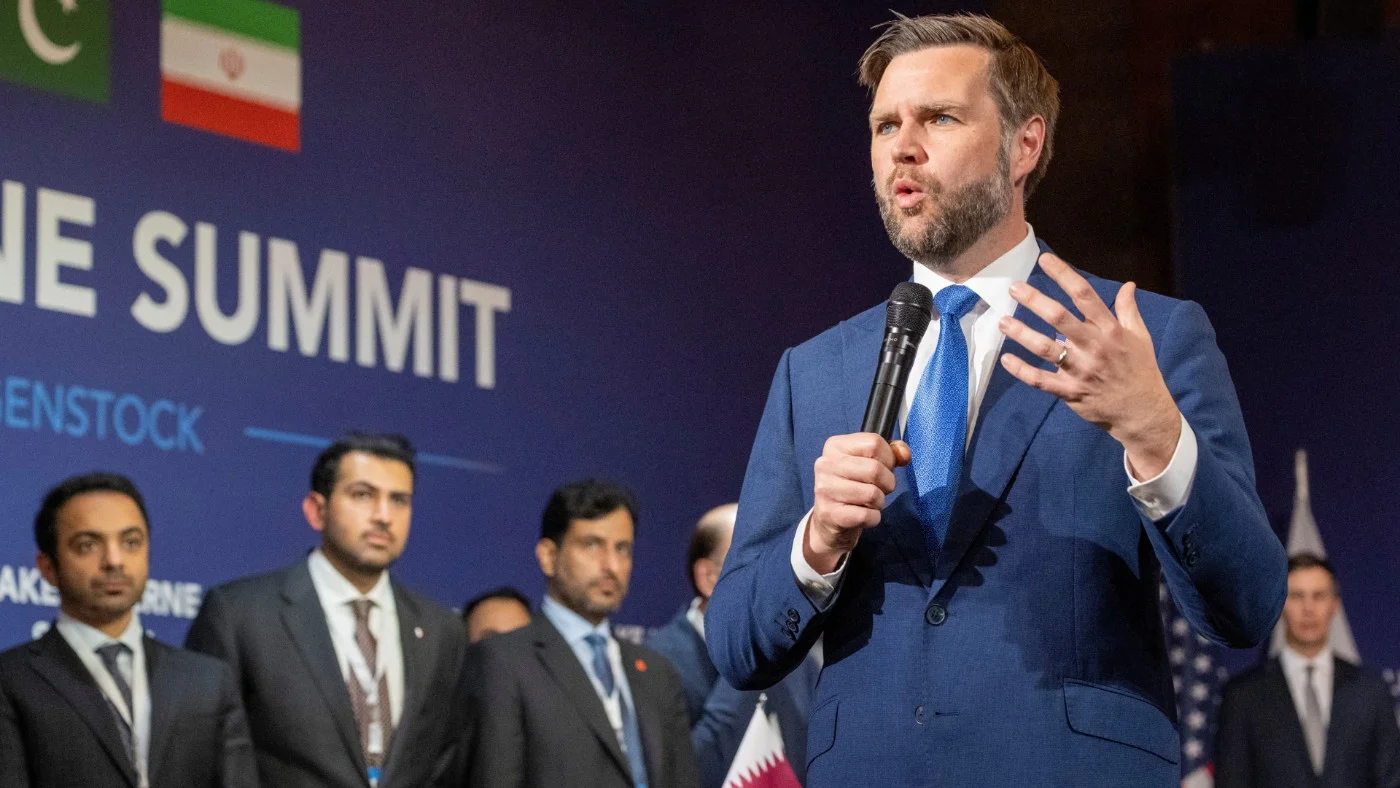
Mediators said that talks between the U.S and Iran in Switzerland to resolve points of tension in the 60-day interim peace agreement to end the Iran War, particularly Israel’s ongoing bombing and occupation of Lebanon, saw “encouraging progress” as the conflict entered its 115th day on Monday.
On June 17, U.S. President Donald Trump and Iran’s President Masoud Pezeshkian signed a memorandum of understanding to pursue a 60-day period of negotiations, designed to lead to a permanent settlement of the Iran War. The first article of the interim peace agreement conditions an end to the conflict on the “immediate and permanent termination of military operations on all fronts, including in Lebanon” and “ensuring the territorial integrity and sovereignty of Lebanon.” Israel has continued to bomb and occupy southern Lebanon despite the agreement, killing at least 4,106 people since March 2 per Lebanon’s Health Ministry. Iran has threatened to withdraw from the deal if violations of the agreement continue.
In a joint statement on Sunday evening, Qatar and Pakistan said that the U.S. and Iran “have agreed to the establishment of a High Level Committee” that “Chief negotiators will report regularly to,” leading “working groups focused on nuclear, sanctions, and a monitoring and dispute resolution group to ensure the effective implementation of the MoU, and on other matters.” The statement added that the U.S. and Iran “agreed on the creation of a de-confliction cell, between the parties, the Lebanese Republic, and facilitated by the Mediators, to ensure the adherence of the termination of military operations in Lebanon as per the MoU.”
U.S. Vice President JD Vance said on Monday that the Switzerland talks created a “good foundation for a successful final deal,” while indicating that the U.S. may agree to unfreeze Iranian funds for purchases of U.S. agricultural products. Vance said that “the Iranians have agreed to invite IAEA inspectors back into their country.”
Following the conclusion of the talks, the U.S. Department of Treasury on Monday issued oil waivers for Iran through August 21, allowing a general license for Iran that authorized “the production, delivery, and sale of Iranian oil” as well as “petrochemical products, and petroleum products of Iranian origin.”
Subscribe Today
Get daily emails in your inbox
Iran’s Foreign Minister Abbas Aragchi posted to X on Sunday night that “tireless Pakistani and Qatari mediation has delivered major progress to end the Lebanon War,” adding that “oil and petrochem exports are waived, blockade lifted, some frozen assets released, and major reconstruction & development plan launched for Iran.” The foreign minister said that the “first real test” of the deal would be the “Lebanon deconfliction cell.”
Israel’s Foreign Minister Gideon Sa’ar said Monday morning that Israel “will not withdraw” from territory it occupies in Lebanon, referring to it as a “security zone” while denying that Israel has “territorial ambitions in Lebanon.” Israel’s Defense Minister Israel Katz on Sunday afternoon said that “Israel has no intention of withdrawing from Beaufort, which is an integral part of the security zone in Lebanon.” Beaufort, which Israel now occupies as part of what it calls its “security zone,” is approximately 9 miles deep into Lebanese territory.
MarineTraffic said Monday that 71 vessels transited the Strait of Hormuz from Friday through Sunday. The price of Brent Crude oil was $78 per barrel on Monday, and AAA reported the national average price of regular gas at $3.93 per gallon.
Read the full article here
