

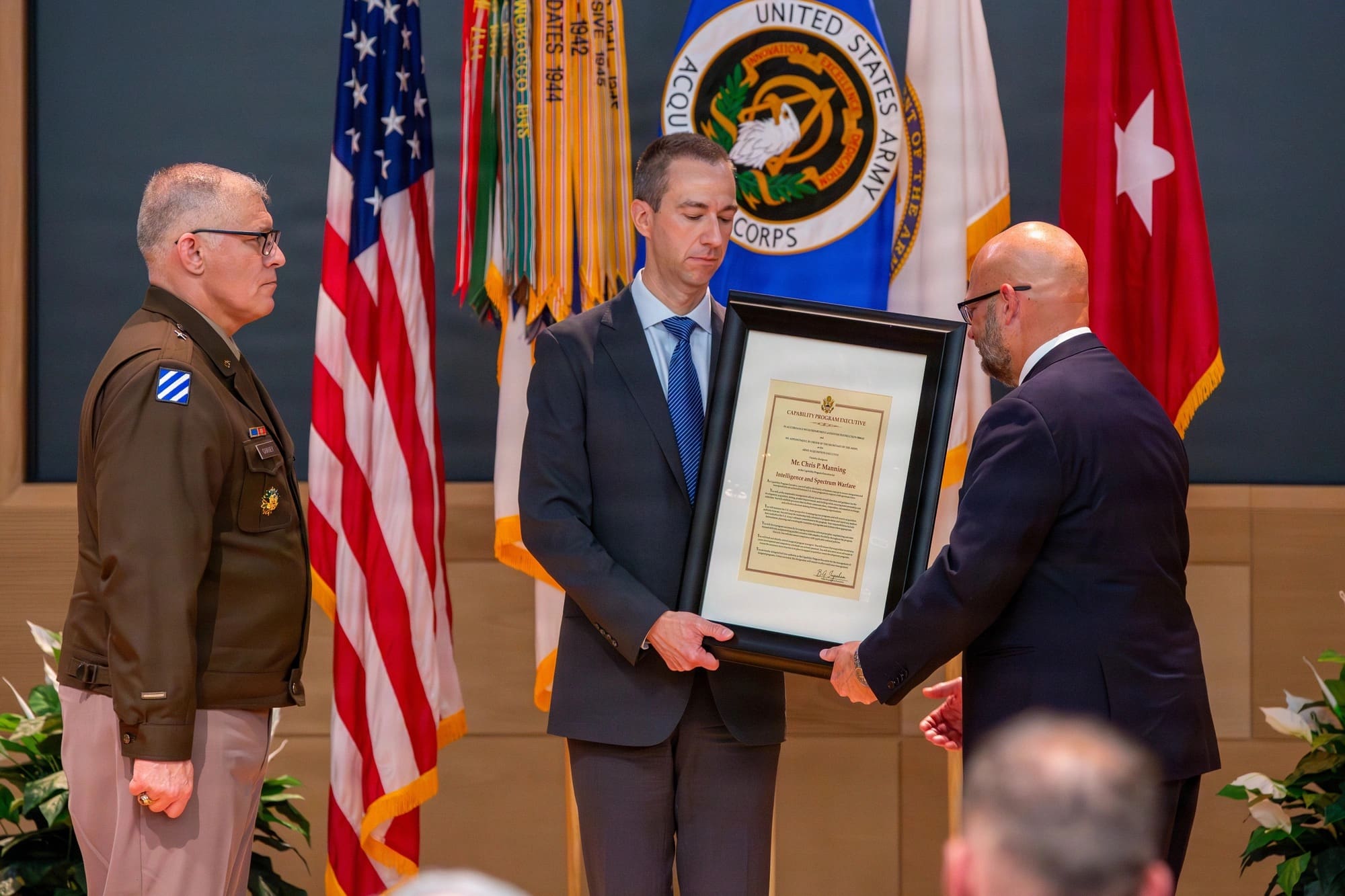
CPE ISW – Change of Charter – Brigadier General Kevin S. Chaney to Mr. Chris P. Manning. From left to right: Brigadier General Kevin S. Chaney, Mr. Joseph D. Welch (Portfolio Acquisition Executive, Command and Control and Counter-Command and Control), Mr. Chris P. Manning
In a ceremony at Aberdeen Proving Ground on June 9, Brig. Gen. Kevin Chaney passed the leadership torch of Capability Program Executive Intelligence and Spectrum Warfare (CPE ISW) to Chris Manning, former Deputy Portfolio Acquisition Executive (PAE) for Command and Control (C2) and Counter C2. Chaney had taken over as CPE, formerly Program Executive Offe Intelligence, Electronic Warfare and Sensors (PEO IEW&S) last July. Chaney was not a new face to the organization when he accepted the charter having previously served multiple tours at Project Manager for Aircraft Survivability Equipment (PM ASE).
His return to the organization as CPE was short but eventful. He led the organization’s evolution into a new structure where multiple offices were affected. Chaney deftly led the workforce through the uncertainty of reorganization, moving CPE ISW forward into the future of technology and acquisition while supporting ongoing operational events seamlessly. “So, I started the year as PEO for IEW&S and leave as CPE for ISW. Obviously, this means so much more than a name change. We have been shuffling the deck with our organizations to find efficiencies and align programs where they best meet current Army demands. We rolled with the punches, without allowing the mission to suffer. The name of the respective org may have changed, but the mission has not, field critical technology to our men and women in the field,” Chaney said.
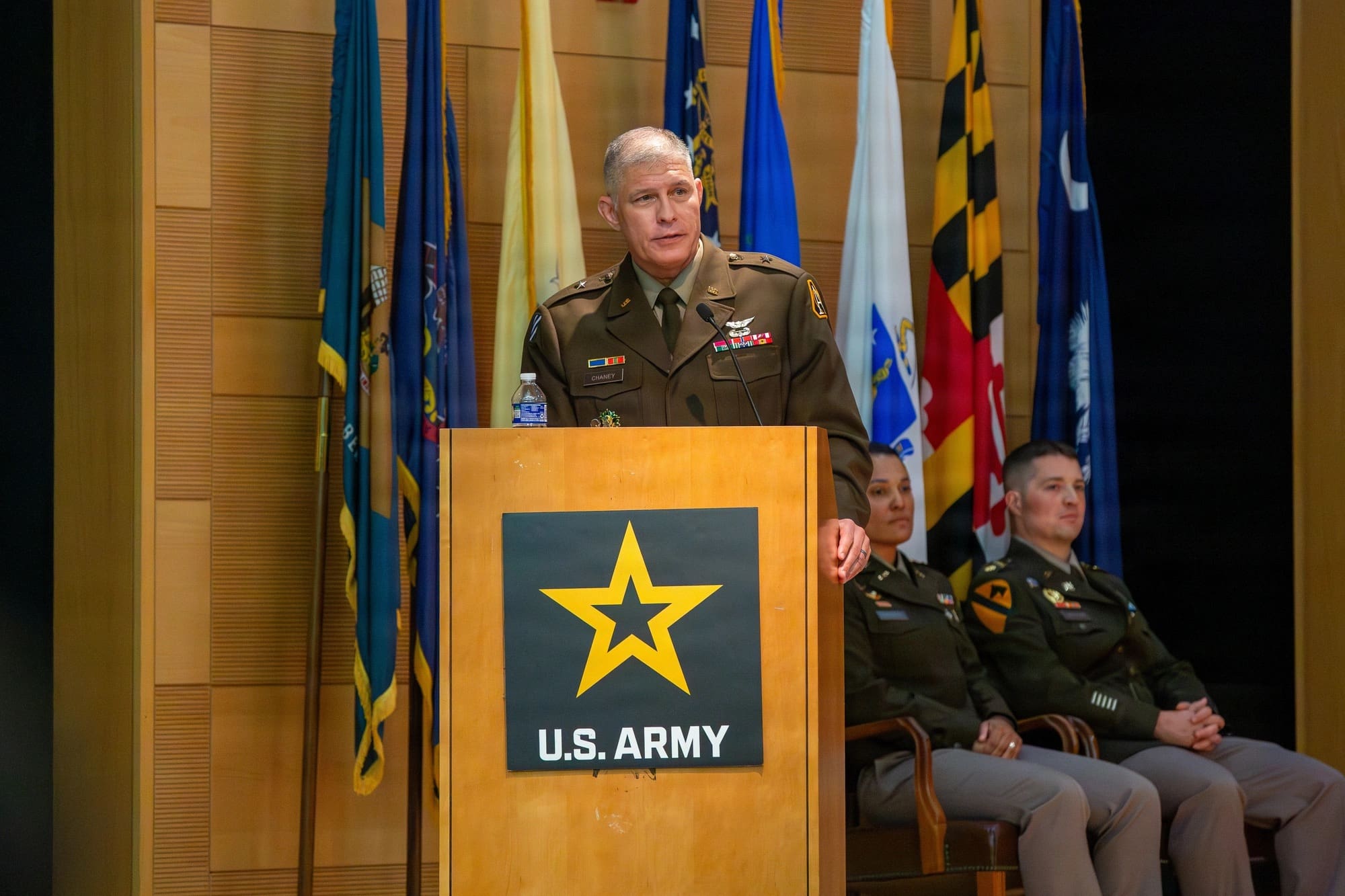
Brigadier General Kevin S. Chaney
In a ceremony at Aberdeen Proving Ground on June 9, Brig. Gen. Kevin Chaney passed the leadership torch of Capability Program Executive Intelligence and Spectrum Warfare (CPE ISW) to Chris Manning, former Deputy Portfolio Acquisition Executive (PAE) for Command and Control (C2) and Counter C2. Chaney had taken over as CPE, formerly Program Executive Offe Intelligence, Electronic Warfare and Sensors (PEO IEW&S) last July. Chaney was not a new face to the organization when he accepted the charter having previously served multiple tours at Project Manager for Aircraft Survivability Equipment (PM ASE).
His return to the organization as CPE was short but eventful. He led the organization’s evolution into a new structure where multiple offices were affected. Chaney deftly led the workforce through the uncertainty of reorganization, moving CPE ISW forward into the future of technology and acquisition while supporting ongoing operational events seamlessly. “So, I started the year as PEO for IEW&S and leave as CPE for ISW. Obviously, this means so much more than a name change. We have been shuffling the deck with our organizations to find efficiencies and align programs where they best meet current Army demands. We rolled with the punches, without allowing the mission to suffer. The name of the respective org may have changed, but the mission has not – field critical technology to our men and women in the field,” Chaney said.
CPE ISW consists of more than 80 programs that deliver and sustain technologies that provide Soldiers, joint services, allies and international partners with decisive advantage for all operational environments. The categories of technologies within the CPE portfolio include offensive and defensive cyber capabilities, electromagnetic warfare (EW), modern intelligence systems, assured position, navigation and timing solutions, multidomain and surveillance sensors, biometric systems, force protection systems and more.
Amongst the key accomplishments of CPE ISW with Chaney at the helm, includes the timely execution of support to the Joint Task Force Southern Border. The surveillance systems and EW capabilities deployed at the tactical edge dramatically enhanced border security operations with situational awareness and integration of multiple military and federal law enforcement elements.
Under Chaney’s leadership, ISW succeeded in championing the Army’s priority of acquisition reform. The organization aggressively pursued novel contracting avenues, most notably through its first execution of Commercial Solutions Openings (CSOs). This acquisition strategy significantly reduces acquisition timelines and rapidly transitions cutting-edge, commercially derived technologies directly to the Joint Force. Specifically, this strategy was employed in the prototype award for the Electromagnetic Warfare Rapid Integration System (ERIS). ERIS is a forward-looking initiative designed to counter sophisticated radio frequency threats through adaptable, scalable technology.
In further advancement of Army modernization initiatives, Chaney led the integration of ISW technologies into the Next Generation Command and Control (NGC2) architecture by leveraging key exercises like Lightning Surge and Ivy Sting and preparing for the upcoming Project Convergence Capstone 6.
Under Chaney’s leadership ISW also began its support to the new Intelligence Electronic Warfare (IEW) Battalions this year. IEW Battalions are new or restructured specialized units that focus on enhancing situational understanding in large scale combat operations. Intelligence and electronic warfare are two complimentary capabilities that ISW advances through research, development, and modern acquisition strategies.
Chaney oversaw the Tactical Intelligence Targeting Access Node (TITAN) program’s completion of developmental testing and prototype acquisition, which positions the Army for procurement of the key AI-enabled intelligence systems. This capability drastically reduces operational timelines while enhancing assured decision making.
Multi-domain modernization is necessary to expand deep sensing capabilities. Chaney strategically divested obsolete platforms to pivot resources toward more advanced capabilities such as the Army Advanced Synthetic Aperture Radar System. He accelerated the integration of this system into the High Accuracy Detection and Exploitation System (HADES), ensuring deep-look overmatch.
With the unexpected demands of Operation Epic Fury and Operation Absolute Resolve, ISW was ready to support with their full gamut of technologies including ISR, electronic warfare, and more. Under Chaney’s leadership, the organization addressed emerging requirements directly and contributed to increased operational readiness, lethality, and mission effectiveness of deployed forces in two highly contested theaters.
Chaney will move into his next role as Deputy PAE Maneuver Air. There he will continue to be a leader focused on priorities and further develop a workforce that meets the current and future needs of the Army. Going back to aviation where he started his career will be an exciting challenge that Chaney welcomes
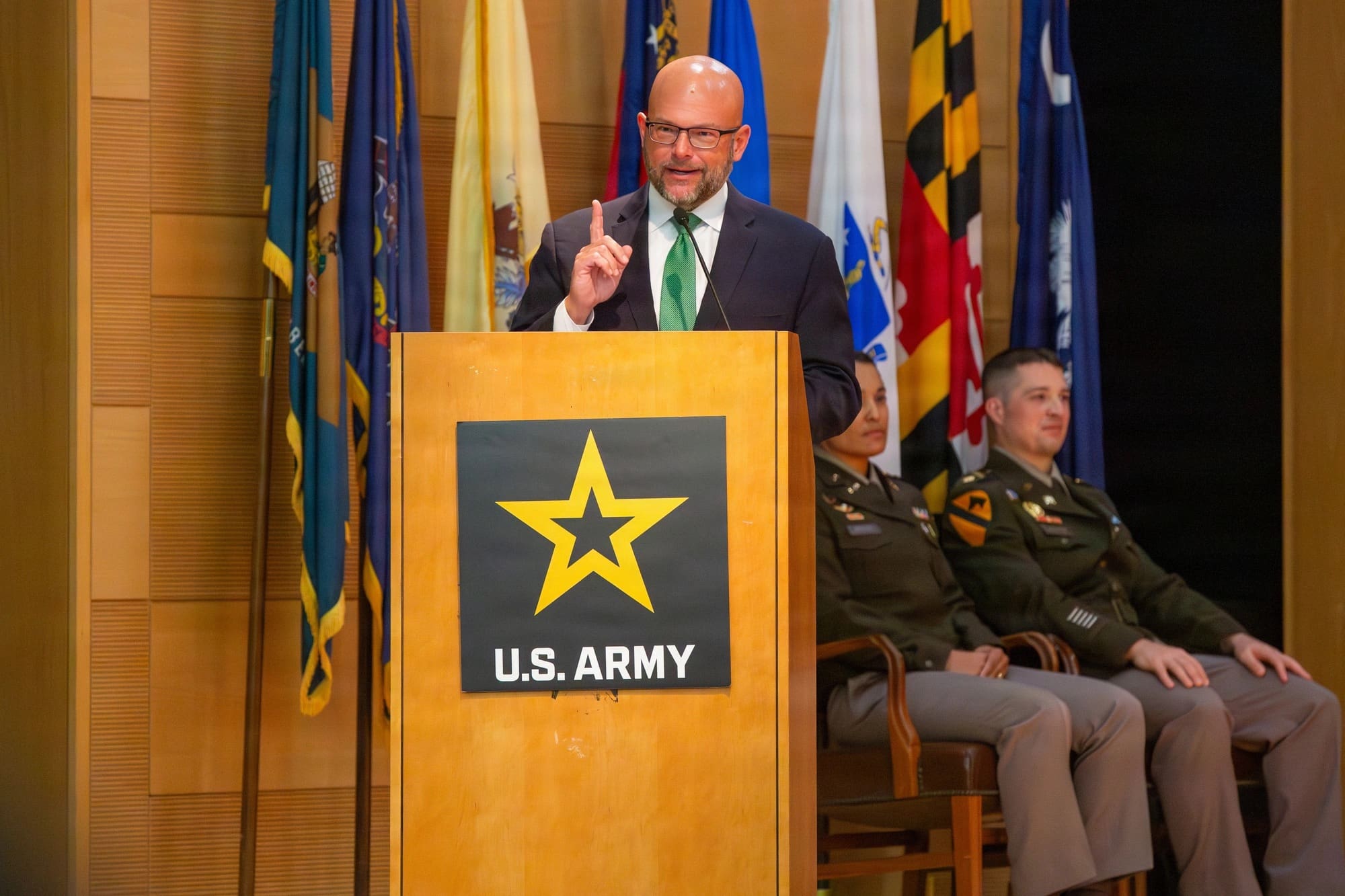
Mr. Chris P. Manning
Manning brings his experience serving concurrently as Deputy PAE C2/Counter C2, and as Deputy Assistant Secretary of the Army for Research and Technology, DASA(R&T). He advised senior leadership on the optimization of resources and meeting needs of the Warfighter more efficiently. This is a homecoming of sorts for Manning as well. Early in his career he was assigned to the former Product Manager Global Positioning Systems office, which transitioned into the Positioning, Navigation and Timing (PNT) office. Manning established the first PEO IEW&S footprint for a Project Manager office when the organization moved from its former location in New Jersey to Aberdeen Proving Ground.
By Allison Weissert | CPE ISW Public Affairs Specialist |
Read the full article here